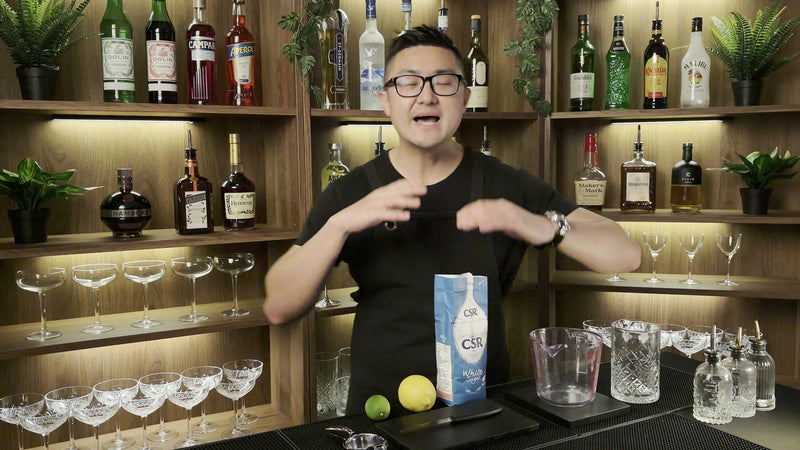
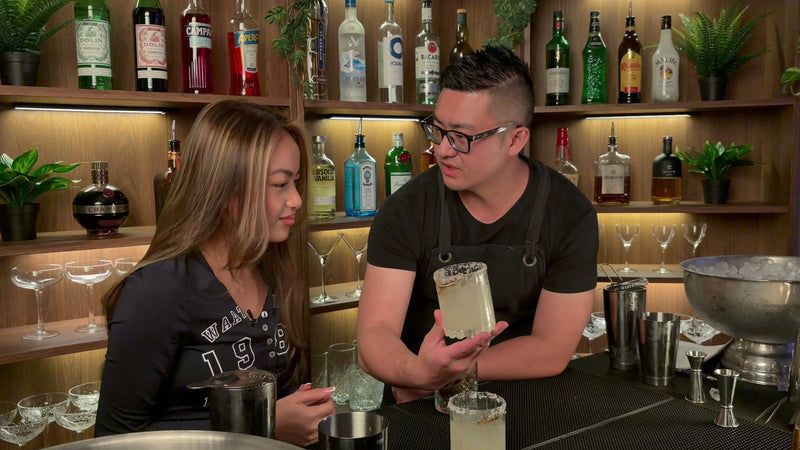
Building a cocktail means assembling it directly in the glass it will be served in. It is commonly used for highballs, spritzes and simple spirit-and-mixer drinks. Built cocktails can still require ice, dilution and gentle stirring, and some drinks, such as an Old Fashioned, can be both built and stirred.
In this guide
Building a cocktail means assembling it directly in the glass it will be served in rather than mixing it in a shaker or separate mixing glass first.
It is common for highballs, spritzes and simple spirit-and-mixer drinks, but it is not a shortcut or a lesser technique. A good built cocktail still needs accurate measurement, appropriate ice, sensible ingredient order and enough integration to make the drink taste balanced.
There is also an important nuance: some cocktails can be both built and stirred. An Old Fashioned, for example, can be assembled directly in its serving glass and then stirred there.
Quick answer
A built cocktail is assembled directly in the serving glass. Measure the ingredients, add appropriate ice, add any carbonated components carefully, integrate gently if needed, garnish and serve.
Building is particularly common for highballs, spritzes and simple mixed drinks. It still involves chilling, dilution and technique. It is simply a different preparation method from shaking or stirring in a separate vessel.
What does “build” mean in bartending?
In bartending, to build a cocktail means to assemble it directly in the glass it will ultimately be served from.
Compare that with:
- Shaking: ingredients are mixed with ice in a shaker before being strained.
- Stirring: ingredients are chilled and diluted through controlled stirring, often in a mixing glass but sometimes directly in the serving glass.
- Building: ingredients are assembled directly in the serving glass.
See How to Shake a Cocktail Properly, How to Stir a Cocktail Properly and Shake vs Stir: When Should You Shake or Stir a Cocktail?.
Building describes where the drink comes together. It does not necessarily describe every action performed afterward.
Why are some cocktails built instead of shaken or stirred?
Building works particularly well for drinks that:
- have a relatively simple structure
- contain a carbonated mixer
- are served over ice
- need only gentle integration
- do not require the texture created by vigorous shaking
It is especially practical for long drinks where the serving glass already provides the space needed for ice, spirit and mixer.
Building is not “doing nothing.” It is choosing the amount of technique the drink actually requires.
Which cocktails are commonly built?
Common examples include:
- Aperol Spritz
- many highballs
- Gin and Tonic-style drinks
- spirit-and-soda drinks
- some Mojito preparations
- some short cocktails assembled directly over ice
These are conventions rather than immutable rules, and individual recipes may use slightly different workflows.
What is a highball?
A highball is a broad style of long drink built around a base ingredient, commonly a spirit, combined with a larger amount of mixer.
The mixer is often carbonated, although cocktail terminology is not perfectly rigid.
Highballs are typically served in tall glasses over plenty of ice.
How to build a cocktail
A practical beginner method is:
- Choose the appropriate serving glass.
- Measure the ingredients accurately.
- Add the ingredients in an order that suits the recipe.
- Add enough cold, solid ice.
- Add carbonated components carefully where applicable.
- Stir or lift gently if the drink needs integration.
- Add the garnish.
- Serve promptly.
There is no single ingredient order that applies to every built cocktail.
Do you add ice first or ingredients first?
Both approaches exist.
Some drinks are assembled over ice. In other workflows, one or more measured ingredients go into the glass before the ice is added.
The most important considerations are:
- accurate measurement
- enough ice
- appropriate chilling
- good integration
- avoiding unnecessary agitation of carbonated ingredients
Follow the specific recipe rather than assuming one sequence is universally correct.
Should you stir a built cocktail?
Sometimes.
A built drink may need a brief, gentle stir to distribute its ingredients evenly.
Other drinks integrate sufficiently as the ingredients are added.
There is no universal stir count.
How should you stir a carbonated cocktail?
If integration is required, stir gently.
Carbonation is gradually lost whenever a carbonated drink is poured, moved or agitated, so excessive stirring is usually unnecessary.
A short, controlled movement is generally enough for a built highball or spritz that needs help combining.
Should soda water go in last?
Often, but not as an absolute rule.
Adding the carbonated component later in the build is a common workflow because it allows the spirit and other ingredients to be measured first and helps avoid unnecessary agitation of the soda.
Some recipes use different sequences successfully.
How do you keep a built cocktail fizzy?
Useful habits include:
- use a chilled carbonated mixer where practical
- avoid unnecessary shaking or aggressive stirring
- pour the mixer carefully
- keep the drink cold with enough ice
- serve it promptly
You do not need to treat carbonation as fragile to the point that the drink cannot be touched. The goal is simply to avoid unnecessary agitation.
Does building dilute a cocktail?
Yes.
A cocktail does not need to be shaken or stirred in a separate vessel for dilution to occur.
If the finished drink contains ice, that ice absorbs heat and melts over time.
That means a built cocktail can continue chilling and diluting after it reaches the drinker.
See Why Is My Cocktail Too Watery or Too Strong?.
Does a built cocktail need chilling?
Yes.
Many built drinks rely heavily on the serving ice to bring the drink down to an enjoyable temperature.
Chilled mixers can also help, particularly in highballs and spritzes.
That does not mean every ingredient needs to come straight from the refrigerator. It simply means temperature remains part of the technique.
Built vs shaken vs stirred
| Method | Built | Shaken | Stirred |
|---|---|---|---|
| Where mixed | Serving glass | Shaker | Usually mixing glass, sometimes serving glass |
| Typical styles | Highballs, spritzes, simple mixed drinks | Citrus-driven and texture-focused drinks | Many spirit-forward drinks |
| Agitation | Usually low | Vigorous | Controlled |
| Carbonation | Common | Usually avoided during shaking | Less common |
| Straining | Usually none | Usually | Often, but not always |
These are useful patterns rather than strict boundaries.
Built and stirred are not mutually exclusive
This is one of the most useful beginner distinctions.
“Built” describes where the cocktail is assembled.
“Stirred” describes an action used to chill, dilute or integrate it.
That means one cocktail can legitimately be both.
Is an Old Fashioned built or stirred?
It can be either prepared in a separate mixing vessel or built directly in the serving glass and stirred there.
Both approaches are used.
See How to Make an Old Fashioned.
Is a Negroni built or stirred?
A Negroni can also be stirred separately and strained, or assembled directly over ice and stirred in the serving glass.
This is another good example of why cocktail-method labels sometimes overlap.
Is an Aperol Spritz built?
Yes, it is commonly assembled directly in the serving glass over ice.
The exact ingredient order can vary, but there is generally no need to shake the drink.
See How to Make an Aperol Spritz.
Is a Mojito built?
A Mojito is often assembled directly in its serving glass, although the exact process varies.
Depending on the recipe, the drink may involve:
- mint
- lime
- sugar or syrup
- rum
- ice
- soda
The handling of the mint and the level of integration matter as much as the fact that the drink is built.
See How to Make a Mojito.
Is a Gin and Tonic a built cocktail?
Generally, yes.
The gin, ice and tonic are assembled directly in the serving glass.
A gentle stir may be used if needed.
Can you build a Margarita?
You can create built Margarita-style variations, but the familiar Margarita is normally shaken.
Fresh citrus, orange liqueur and sweetener benefit from the rapid chilling and integration that shaking provides.
See How to Make a Margarita and How to Shake a Cocktail Properly.
Can you build an Espresso Martini?
Not if you are aiming for the familiar Espresso Martini style.
Shaking plays an important role in its:
- chilling
- dilution
- integration
- texture and foam
See How to Make an Espresso Martini.
Does ingredient order matter?
Sometimes.
Ingredient order can affect:
- ease of measuring
- how easily ingredients integrate
- how ice displaces the liquid
- how much a carbonated ingredient is disturbed
- intentional layering
But there is no universal sequence for every built cocktail.
The safest beginner rule is to follow the recipe rather than memorising one order for everything.
Spirit first or mixer first?
There is no universal winner.
Many highball recipes use the spirit first and mixer later because it is an easy workflow.
Other sequences can work too.
Accurate proportions and appropriate integration matter more than treating the order as a law.
How to build a highball properly
- Use a tall glass with enough room for ice and mixer.
- Measure the base spirit accurately.
- Add plenty of cold, solid ice.
- Add the chilled mixer.
- Integrate gently if necessary.
- Add the garnish.
- Serve promptly.
This is a practical default rather than the only acceptable order.
What glass should you use for built cocktails?
Common options include:
- highball glass
- Collins glass
- wine glass
- rocks glass
The right choice depends on the drink's volume, mixer, ice and garnish.
See How to Choose Cocktail Glassware.
What ice should you use for built cocktails?
Standard freezer ice works very well for most built drinks.
Use enough ice to keep the drink properly chilled without crowding the glass beyond its intended volume.
Large-format ice can suit shorter built drinks such as an Old Fashioned or Negroni.
See How Much Ice Should You Use in a Cocktail? and Large Ice vs Standard Ice: Does Ice Size Matter?.
What tools do you need to build cocktails?
Very little.
A basic setup includes:
- jigger
- serving glass
- ice
- bar spoon, optional
You generally do not need a shaker or separate mixing glass for the build itself.
See What Cocktail Tools Do You Actually Need?.
Can you build cocktails in advance?
Partially.
Some non-carbonated components can be prepared or batched ahead when appropriate.
Final serving ice and carbonated mixers are generally better added closer to serving.
A fully assembled carbonated drink will gradually lose carbonation if left sitting.
Can you batch built cocktails?
Yes.
A useful party workflow is:
- Prepare the non-carbonated base mixture where appropriate.
- Keep it chilled.
- Measure the base into each serving glass.
- Add ice.
- Add the chilled mixer.
- Integrate gently if needed.
- Garnish and serve.
This gives you the convenience of batching without leaving finished carbonated drinks sitting around.
How to build multiple highballs quickly
Line up the glasses and work through the same stage across each one:
- Measure the base into each glass.
- Add ice.
- Add the mixer.
- Integrate gently.
- Garnish.
- Serve.
Accuracy still matters even when making several drinks at once.
What does “top with soda” mean?
“Top with soda” means adding soda after the main measured ingredients until you reach the proportion or volume intended by the recipe.
It does not mean filling an oversized glass to the brim regardless of the recipe.
What does “lengthen” a cocktail mean?
To lengthen a cocktail means adding a larger volume of a non-spirit component, such as soda or another mixer, to turn it into a longer drink.
The resulting drink usually has a larger total volume and a different drinking style.
What does “float” mean?
A float is an ingredient added carefully near the top of a drink, sometimes to create a separate layer or concentrated final aroma and flavour.
It is a separate technique from simply building a cocktail.
What is layering?
Layering means deliberately arranging ingredients so they remain visibly or texturally separated rather than fully integrated.
Some built drinks use layering, but most everyday built cocktails aim for a reasonably even mixture.
Can you build a cocktail without ice?
Yes.
Building describes where the ingredients are assembled, not whether the final drink contains ice.
Many common built cocktails happen to be served over ice, but that is not part of the definition itself.
Does building make a weaker cocktail?
No.
The preparation method does not determine alcoholic strength by itself.
Strength depends on:
- the amount of spirit
- the strength of the ingredients
- the amount of mixer
- dilution
- the recipe's proportions
Why does my highball taste too strong?
Possible causes include:
- too little mixer
- too much spirit
- inaccurate measurement
- insufficient dilution
- a higher-strength base spirit
See Why Is My Cocktail Too Watery or Too Strong?.
Why does my highball taste watery?
Possible causes include:
- too much mixer
- the drink sitting over melting ice for too long
- warm starting ingredients
- weak recipe proportions
Do not automatically blame the amount of ice.
Why does my built cocktail taste flat?
If the drink contains a carbonated mixer, possible causes include:
- the mixer had already lost carbonation
- the mixer was warm
- the drink was stirred or handled excessively
- the finished drink sat for too long
Poor recipe balance can also make a drink feel flat even when the carbonation itself is fine.
Why is my drink stronger at the bottom?
The ingredients may not have integrated evenly.
A brief, gentle stir or lift through the drink can help distribute the components without unnecessarily agitating a carbonated mixer.
Do built cocktails need a garnish?
Not necessarily.
Common garnishes include:
- citrus wedge
- citrus wheel
- expressed twist
- mint
- orange slice
Use the garnish when it contributes aroma, flavour or presentation. It is not mandatory simply because the cocktail was built.
Common cocktail-building mistakes
Eyeballing the spirit
Use a jigger rather than relying on the glass to tell you how much spirit went in.
Using too little ice
Enough cold ice helps the drink chill and remain cold.
Using a warm carbonated mixer
A chilled mixer reduces the amount of warming the serving ice needs to overcome.
Filling an oversized glass with extra mixer
Follow the intended proportion rather than changing the recipe simply to make the glass look full.
Over-stirring carbonation
Use only as much agitation as the drink requires.
Not integrating the drink at all
If the bottom and top taste noticeably different, a gentle stir can help.
Assuming build order never matters
Some drinks are forgiving, but specific recipes may have good reasons for their sequence.
Using flat soda
The quality of the mixer still matters.
Letting the finished drink sit too long
Temperature, dilution and carbonation continue changing after the drink is made.
Confusing “built” with “unmixed”
A built cocktail still needs enough integration to taste coherent.
Treating “top with soda” as unlimited mixer
The recipe still needs a sensible proportion.
Assuming built drinks have no dilution
Serving ice still melts.
Building a drink that normally benefits from shaking just to save time
Choose the method that suits the drink rather than the method that creates the least washing up.
A method, not a shortcut
Building is one of the core ways cocktails are assembled.
It looks simple because the drink comes together directly in the serving glass, but good built cocktails still depend on measurement, chilling, dilution, carbonation and balance.
Understanding why one cocktail is built while another is shaken or stirred is part of learning how cocktail recipes actually work.
Cocktail Playbook's beginner cocktail course teaches those fundamentals through real drinks so the method becomes something you understand rather than another rule to memorise.
Frequently asked questions
What does building a cocktail mean?
It means assembling the ingredients directly in the glass the cocktail will be served from.
What is a built cocktail?
A built cocktail is a drink prepared directly in its serving glass rather than in a separate shaker or mixing vessel.
What cocktails are commonly built?
Highballs, spritzes, Gin and Tonic-style drinks, spirit-and-soda drinks and some Mojito preparations are common examples.
Is a highball a built cocktail?
Usually, yes. Most highballs are assembled directly in a tall serving glass over ice.
Is an Aperol Spritz built?
Yes. It is commonly assembled directly in a wine glass over ice.
Is a Mojito built?
Often, although exact preparation methods vary.
Is an Old Fashioned built or stirred?
It can be both. An Old Fashioned can be built in the serving glass and stirred there, or stirred separately and strained over fresh ice.
Is a Negroni built or stirred?
Both approaches are used. It can be stirred separately or built and stirred in the serving glass.
Should you add ice first when building a cocktail?
Not always. Both ice-first and ingredient-first approaches exist depending on the recipe.
Should soda go in last?
It often does because that is a convenient way to minimise unnecessary agitation, but it is not a universal rule.
Should you stir a built cocktail?
Sometimes. Use a gentle stir when the ingredients need help integrating.
Does building dilute a cocktail?
Yes. Serving ice continues to melt and dilute the drink.
What is the difference between built, shaken and stirred cocktails?
Built cocktails come together in the serving glass. Shaken cocktails are mixed vigorously in a shaker. Stirred cocktails use controlled stirring, usually with ice.
What does “top with soda” mean?
It means adding soda until the drink reaches the proportion intended by the recipe, not automatically filling the glass to the brim.
Do you need a shaker for a built cocktail?
No. The drink is assembled directly in its serving glass.
Can you batch built cocktails?
Yes. Prepare appropriate base components ahead, then add fresh ice and carbonated mixer closer to serving.
Why does my highball taste too strong?
It may contain too much spirit, too little mixer, insufficient dilution or a higher-strength base than expected.
Why does my built cocktail taste flat?
A carbonated mixer may have lost fizz, the drink may have been over-stirred or left sitting, or the recipe itself may be poorly balanced.
Why is my drink stronger at the bottom?
The ingredients may not have integrated evenly. A gentle stir can usually help.
Related Guides
- Shake vs Stir: When Should You Shake or Stir a Cocktail?
- How to Shake a Cocktail Properly
- How to Stir a Cocktail Properly
- How Much Ice Should You Use in a Cocktail?
- Large Ice vs Standard Ice: Does Ice Size Matter?
- Why Is My Cocktail Too Watery or Too Strong?
- How to Make an Aperol Spritz
- How to Make a Mojito
- How to Make an Old Fashioned
- How to Make a Negroni
- How to Choose Cocktail Glassware
- What Cocktail Tools Do You Actually Need?