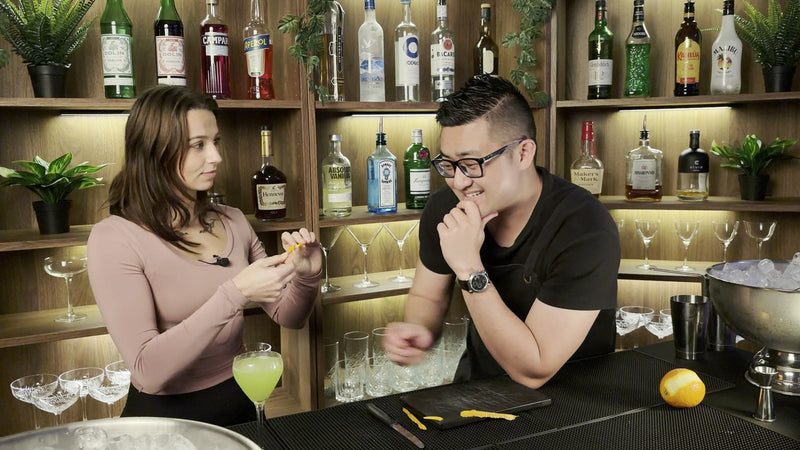
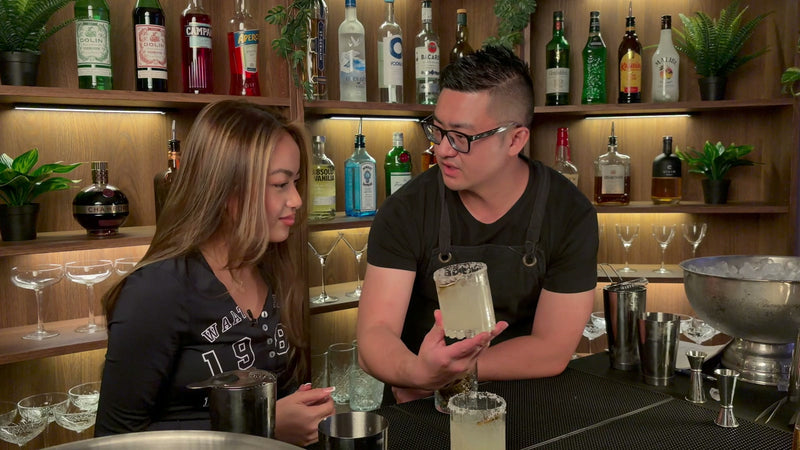
To make a classic Margarita, shake 50 ml 100% agave blanco tequila, 25 ml orange liqueur and 25 ml fresh lime juice with plenty of ice. Strain into a chilled glass or over fresh ice, with an optional salt rim and lime garnish. If your limes are especially sharp, add around 5 ml agave syrup to taste.
In this guide
If you want to make a Margarita at home, start with three ingredients: tequila, fresh lime juice and orange liqueur. Measure them properly, shake them hard with ice and serve the drink either straight up or over fresh ice.
A reliable beginner recipe is 50 ml 100% agave blanco tequila, 25 ml orange liqueur and 25 ml fresh lime juice. This easy 2:1:1 structure gives you a bright, tequila-forward Margarita that you can adjust slightly once you know how you prefer it.
If your limes are particularly sharp, around 5 ml agave syrup can soften the acidity without turning the drink into an overly sweet Margarita.
Classic Margarita recipe
Ingredients
- 50 ml 100% agave blanco tequila
- 25 ml orange liqueur, such as triple sec or Cointreau
- 25 ml fresh lime juice
- 5 ml agave syrup, optional and to taste
- Salt for the rim, optional
- Lime wheel or wedge, for garnish
- Plenty of fresh ice
Method
- Prepare the glass. If you want a salt rim, run a lime wedge around the outside edge of half the glass and dip that section into salt.
- Measure the ingredients. Add the tequila, orange liqueur and fresh lime juice to a cocktail shaker. Add agave syrup if you are using it.
- Add plenty of ice. Fill the shaker generously with fresh, solid ice.
- Shake vigorously. Shake for around 10 to 15 seconds, or until the shaker is thoroughly cold.
- Strain and serve. Strain into a chilled coupe or cocktail glass for a Margarita served up, or into a rocks glass filled with fresh ice for a Margarita on the rocks.
- Garnish. Add a lime wheel or wedge and serve immediately.
Beginner Tip: If this is your first Margarita, make the recipe exactly as written before adjusting it. It is much easier to understand what needs changing when you have a consistent starting point.
What ingredients are in a Margarita?
A classic Margarita belongs to the sour family of cocktails. Its basic structure combines a base spirit, citrus and a sweet component.
In a Margarita, those roles are filled by:
- tequila for strength and agave flavour;
- lime juice for acidity and freshness;
- orange liqueur for sweetness, orange aroma and additional alcohol.
A salt rim is traditional and useful, but optional. Additional agave syrup is also optional rather than a required fourth ingredient.
What is the best Margarita ratio?
There is no single Margarita ratio that every bartender uses.
A particularly easy structure to remember is:
2 parts tequila + 1 part orange liqueur + 1 part fresh lime juice.
For one drink, that becomes:
- 50 ml tequila;
- 25 ml orange liqueur;
- 25 ml fresh lime juice.
Other established Margarita specifications use less lime, more orange liqueur or a small amount of added agave or sugar syrup. That does not make one recipe wrong and another correct. Lime acidity, liqueur sweetness and personal preference all affect the balance.
The useful skill is understanding what each ingredient changes.
If your Margarita is too sour
Do not immediately pour in a large amount of syrup.
Start by adding around 5 ml agave syrup, shake briefly again and taste. Alternatively, slightly reduce the lime in your next drink.
If your Margarita is too sweet
Reduce any added syrup first. If there is none, slightly reduce the orange liqueur or increase the lime juice.
If your Margarita tastes too strong
Make sure it has been shaken long enough to become properly chilled and diluted before changing the recipe. An under-chilled Margarita can taste much harsher than a properly shaken one.
For a deeper explanation, see why a cocktail tastes too watery or too strong.
What tequila should you use for a Margarita?
100% agave blanco tequila is an excellent starting choice.
Blanco tequila is generally unaged or only briefly rested before bottling, allowing the agave character to remain prominent. Its bright profile works particularly well with lime and orange liqueur.
Look for the words 100% agave on the bottle if you want a straightforward benchmark for your first Margaritas.
That does not mean every tequila outside that category is automatically bad. It simply gives a beginner a more useful starting point than assuming any bottle labelled tequila will produce exactly the same result.
Can you use reposado tequila in a Margarita?
Yes.
Reposado tequila spends time ageing in oak, so it can bring softer vanilla, spice and wood notes to the drink. The result is usually rounder and slightly richer than a Margarita made with blanco.
Blanco remains the easiest place to start if you want the bright style most closely associated with the classic drink.
What orange liqueur should you use in a Margarita?
The traditional style of Margarita uses an orange liqueur from the triple sec family.
Cointreau is a well-known example of triple sec and is commonly used in Margaritas. Different orange liqueurs vary in sweetness, alcohol strength and flavour intensity, so replacing one with another can change the balance of the drink.
Is triple sec the same as Cointreau?
Triple sec is a category of orange liqueur. Cointreau is a specific brand within that broad style.
This is why a recipe may simply say "triple sec" while another specifically calls for Cointreau.
For a beginner, either can work. Just remember that changing liqueurs may require a small adjustment to the lime or sweetness.
Can you use Grand Marnier in a Margarita?
Yes, but expect a different result. Grand Marnier is based on Cognac and orange liqueur, giving the Margarita a richer and more rounded character than a typical triple sec.
It is a variation rather than a requirement for a classic Margarita.
Why should you use fresh lime juice in a Margarita?
A Margarita contains very few ingredients, so the character of the lime is difficult to hide.
Freshly squeezed lime juice is the most reliable choice for the bright acidity expected in a classic Margarita.
Bottled lime products vary considerably. Some are genuine juice, while others are sweetened, preserved or formulated more like cordial. They are not automatically interchangeable with freshly squeezed lime in a cocktail recipe.
Beginner Tip: Squeeze your lime shortly before making the drink rather than treating citrus juice like a mixer that can sit indefinitely in the fridge.
How do you salt a Margarita glass properly?
You do not need to bury the entire rim in salt.
A half salt rim is particularly useful because it lets the person drinking choose between salted and unsalted sips.
- Place a small amount of salt on a plate.
- Cut a small notch in a lime wedge.
- Run the lime around the outside edge of half the glass.
- Gently roll that section of the rim through the salt.
- Shake off any loose excess.
Try to keep most of the salt on the outside of the glass rather than filling the inside edge. This gives you better control over how much salt reaches each sip.
Do you have to salt a Margarita rim?
No. The salt rim is optional.
Salt can change the drinking experience by modifying how you perceive the acidity, sweetness and bitterness in each sip, but there is nothing wrong with preferring your Margarita without it.
Why is a Margarita shaken instead of stirred?
A classic Margarita is shaken because the drink contains fresh citrus and benefits from the rapid chilling, dilution and aeration produced by shaking.
That gives it the lively texture associated with shaken sour-style cocktails.
Fill the shaker generously with ice and shake vigorously rather than gently rocking it from side to side.
If you are learning the technique, see how to shake a cocktail properly and our guide to when to shake or stir a cocktail.
Should a Margarita be served up or on the rocks?
Both are established ways to serve a Margarita.
Margarita served up
Shake the drink and strain it into a chilled coupe, cocktail glass or Margarita glass without ice.
This gives you a clean presentation and means the drink does not continue diluting over serving ice.
Margarita on the rocks
Shake the drink, then strain it into a rocks glass filled with fresh ice.
The ice keeps the Margarita cold while you drink it and gradually changes the dilution over time.
Neither presentation is inherently superior. Choose the style you enjoy.
How much ice should you use for a Margarita?
Use a generous amount of fresh, solid ice in the shaker.
Avoid trying to control dilution by using only two or three cubes. Chilling and dilution are linked, and under-icing is not a dependable way to make a stronger drink.
If you serve the Margarita on the rocks, strain it over fresh serving ice rather than automatically transferring the battered ice from the shaker.
See how much ice to use in a cocktail for a fuller explanation of how ice, chilling and dilution work together.
Do you need agave syrup in a Margarita?
Not necessarily.
The orange liqueur already provides sweetness, and many Margarita recipes contain only tequila, orange liqueur and lime.
However, limes vary in acidity and different orange liqueurs have different levels of sweetness. If your finished Margarita tastes sharper than you enjoy, around 5 ml of agave syrup is a practical adjustment.
Add sweetness deliberately rather than assuming every Margarita needs syrup.
Classic Margarita vs Tommy's Margarita
A classic Margarita combines tequila, lime juice and orange liqueur.
A Tommy's Margarita removes the orange liqueur and instead uses agave syrup alongside tequila and lime.
The result places more emphasis on the flavour of the tequila and agave while removing the orange character of the classic drink.
If you want to explore that style, see how to make a Tommy's Margarita.
How to make a Spicy Margarita
A Spicy Margarita uses the same basic structure while introducing chilli.
A simple beginner approach is to add a few thin slices of fresh jalapeño or another suitable chilli to the shaker with the Margarita ingredients, then shake and strain as normal.
Chilli strength varies enormously, so start conservatively. You can always increase the heat in the next drink.
See how to make a Spicy Margarita for a complete recipe.
How to make a Frozen Margarita
A Frozen Margarita is not simply a classic Margarita shaken for longer. It is made in a blender with ice to produce a slushy texture.
Because blending introduces a significant amount of ice and changes both texture and dilution, frozen recipes often need their own proportions rather than blindly using the same recipe as a shaken Margarita.
Treat the Frozen Margarita as its own style of drink rather than a different serving method for exactly the same formula.
Common Margarita mistakes
Mistake 1: Pouring by eye
A Margarita has relatively few ingredients, so inaccurate measurement can quickly push it too sweet, too sour or too spirit-forward.
Use a jigger or another accurate measuring tool while you are learning.
Mistake 2: Treating every orange liqueur as identical
Different liqueurs contain different amounts of alcohol and sugar. Changing the orange liqueur can change the drink even when you pour exactly the same volume.
Mistake 3: Automatically adding lots of sweetener
Taste the basic recipe first. If it needs additional sweetness, make a small adjustment rather than turning the drink into something syrupy.
Mistake 4: Barely shaking the drink
A few gentle movements will not give you the same chilling and aeration as a proper vigorous shake.
Mistake 5: Using tired, melting ice
Fresh, solid ice gives you a more consistent starting point for chilling and dilution.
Mistake 6: Over-salting the rim
A thick crust of salt can dominate every sip. A controlled half rim gives the drinker more choice.
Mistake 7: Assuming the Margarita has one mandatory recipe
Established Margarita ratios vary. Learn one dependable recipe first, then adjust intelligently rather than treating every different specification as a mistake.
Frequently asked questions
What are the three main ingredients in a Margarita?
The core ingredients are tequila, fresh lime juice and orange liqueur. Salt is an optional rim, and some recipes add a small amount of agave or sugar syrup for additional sweetness.
What is the easiest Margarita ratio to remember?
A 2:1:1 ratio is an excellent beginner starting point: two parts tequila, one part orange liqueur and one part fresh lime juice. For example, use 50 ml tequila, 25 ml orange liqueur and 25 ml lime juice.
Is there an official Margarita recipe?
There are recognised specifications, but there is no single ratio used by every bartender or producer. Established recipes differ in their proportions of tequila, orange liqueur and lime, so it is more useful to learn the structure of the drink and then adjust its balance carefully.
Should you use Cointreau or triple sec in a Margarita?
Cointreau is itself a type of triple sec. It is a dependable choice, but other orange liqueurs can also make a Margarita. Because sweetness and alcohol strength vary between products, the final balance may need adjusting.
Can you make a Margarita without triple sec?
Yes. Replacing the orange liqueur with agave syrup gives you the basic structure of a Tommy's Margarita. It will not taste exactly like a classic Margarita because the orange flavour has been removed.
Does a Margarita need simple syrup?
No. Many classic Margarita recipes rely entirely on orange liqueur for sweetness. A small amount of agave or sugar syrup can be added if your particular combination of lime and liqueur tastes too sharp.
Can you use lemon instead of lime in a Margarita?
You can make a tequila sour with lemon, but lime is the citrus associated with the classic Margarita. Replacing it with lemon noticeably changes the drink, so treat it as a variation rather than an exact substitute.
Should a Margarita be shaken or blended?
A classic Margarita is shaken with ice. A Frozen Margarita is blended with ice and has a deliberately slushy texture.
Can you make a Margarita without a cocktail shaker?
Yes, if necessary, using a sturdy food-safe container with a genuinely secure lid. A proper shaker is easier to use and strain from, but the fundamental requirement is a vessel that lets you vigorously chill and mix the drink with ice.
Why does my Margarita taste too sour?
Your limes may be particularly acidic, the drink may contain too little orange liqueur, or your preferred balance may simply be sweeter. Try adding around 5 ml agave syrup before making larger changes.
Why does my Margarita taste too sweet?
Too much syrup or a particularly sweet orange liqueur is usually the first thing to check. Reduce the added sweetener or adjust the balance with a little more fresh lime.
What is the origin of the Margarita?
The Margarita's exact origin is disputed, and several people and places have been credited with inventing it.
Rather than presenting one colourful origin story as settled fact, it is safer to say that tequila, citrus and orange liqueur combinations developed during the first half of the twentieth century and the Margarita subsequently became one of the defining tequila cocktails.
The history is interesting, but you do not need to resolve it to make the drink properly.
The simple Margarita rule to remember
Start with:
- 50 ml 100% agave blanco tequila
- 25 ml orange liqueur
- 25 ml fresh lime juice
Shake hard with plenty of ice, then strain it either up or over fresh ice.
If the drink tastes too sharp for you, add around 5 ml agave syrup. If it tastes too sweet, reduce the sweet component rather than changing everything at once.
Once you understand that balance between tequila, acidity and sweetness, the Margarita becomes much easier to make consistently.
Learn classic cocktails with Cocktail Playbook
A Margarita is a useful cocktail to learn because it teaches several fundamentals at once: accurate measuring, balancing sweet and sour ingredients, shaking with ice, straining and preparing a garnish.
Cocktail Playbook helps complete beginners learn cocktail techniques and classic recipes visually, so you can understand why each step matters and become more confident making drinks at home.
Explore the Cocktail Playbook course if you would like to learn those fundamentals step by step.
Related Guides
- How to Shake a Cocktail Properly
- Shake vs Stir: When to Shake or Stir a Cocktail
- How Much Ice Should You Use in a Cocktail?
- What Cocktail Tools Do You Actually Need?
- How to Make a Tommy's Margarita
- How to Make a Spicy Margarita
- How to Make a Daiquiri
- How to Salt a Cocktail Glass Rim Properly