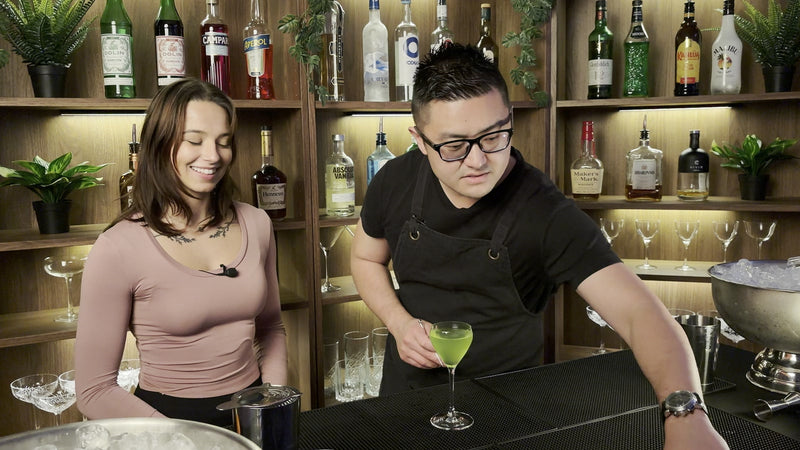
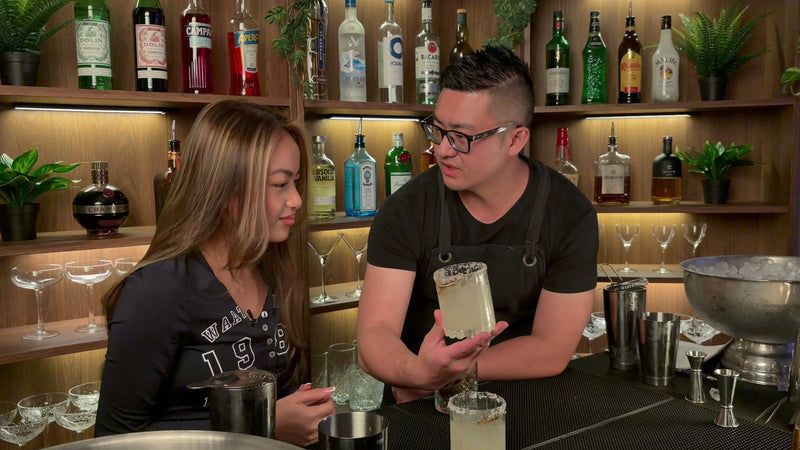
Shake cocktails when ingredients such as citrus juice, fruit juice, egg white, cream or fresh espresso benefit from aeration and a livelier texture. Stir clear, spirit-forward cocktails made mainly with spirits, vermouth, liqueurs and bitters when you want a smooth, clear and silky result. These are practical conventions rather than absolute rules, so follow the recipe when it specifies otherwise.
In this guide
If you're wondering whether a cocktail should be shaken or stirred, there is a simple rule that will get you through most classic recipes: shake drinks containing citrus juice, fruit juice, egg white, cream or other ingredients where aeration and texture are desirable; stir clear, spirit-forward drinks made mainly from spirits, vermouth, liqueurs and bitters.
The reason is not that one method mixes ingredients and the other does not. Both shaking and stirring mix, chill and dilute a cocktail. The important difference is texture and aeration. Shaking introduces tiny air bubbles and creates a lighter, livelier drink. Stirring minimises aeration and produces a clearer, smoother, silkier texture.
There are exceptions, including the Espresso Martini, Bloody Mary and cocktails built directly in the serving glass. Once you understand what each technique is trying to achieve, those exceptions become much easier to understand too.
What is the difference between shaking and stirring a cocktail?
Shaking and stirring perform three essential jobs:
- they mix the ingredients;
- they chill the drink with ice;
- they add a controlled amount of water as the ice melts.
That last point surprises many beginners. Dilution is an intentional part of making a cocktail. A small amount of melted ice softens the alcohol, changes the texture and helps bring the flavours into balance.
The major difference between the techniques is what happens while those three jobs are being done.
What shaking does
Shaking moves the liquid and ice vigorously inside a cocktail shaker. This chills the drink quickly while introducing tiny air bubbles into the liquid.
That aeration changes the texture. A shaken cocktail often feels lighter and more energetic on the palate, and ingredients such as citrus, pineapple, cream, egg white and espresso can develop visible foam.
Shaking can also suspend fine particles from juices and other ingredients throughout the drink, so a shaken cocktail will often appear cloudy or opaque. In a Margarita, Daiquiri or Whiskey Sour, that is completely normal.
What stirring does
Stirring moves the liquid and ice smoothly around a mixing glass without aggressively introducing air.
The cocktail still becomes cold and diluted, but the finished texture remains denser and silkier. Clear ingredients also remain visually clear.
This is why cocktails such as the Martini and Manhattan are traditionally stirred. Their texture, clarity and spirit-forward character are part of the intended drinking experience.
Beginner Tip: Don't think of shaking as the powerful version of stirring. Think of them as two different ways of creating two different textures.
When should you shake a cocktail?
As a practical beginner guideline, shake a cocktail when the recipe contains ingredients where aeration, foam or a lively texture are desirable.
This commonly includes:
- lemon, lime or other citrus juice;
- fruit juice or fruit purée;
- egg white or aquafaba;
- cream or other dairy ingredients;
- coconut cream and similar rich ingredients;
- fresh espresso or coffee when a foamy texture is wanted.
Classic examples include the Margarita, Daiquiri, Whiskey Sour, Cosmopolitan and Espresso Martini.
Notice that the rule is not simply "shake anything containing syrup". An Old Fashioned, for example, may contain sugar syrup but is still normally stirred or built in the glass. Syrup alone does not automatically make a cocktail a shaken drink.
Why are cocktails with citrus usually shaken?
Citrus juice does not literally require shaking in order to mix with alcohol. You could stir lemon juice and gin together and they would still combine.
The reason citrus cocktails are normally shaken is that shaking produces the cold, aerated and slightly textured character associated with drinks such as a Daiquiri, Margarita or Sidecar. It also distributes the juice and its fine suspended material rapidly throughout the drink.
That distinction matters because it turns "citrus means shake" from an arbitrary rule into something you can actually understand.
Why are egg white cocktails shaken?
Egg white is a clearer case. Vigorous agitation helps create and stabilise the foam that gives drinks such as a Whiskey Sour their characteristic texture.
Some recipes use a dry shake, where the drink is first shaken without ice, or a reverse dry shake, where the ice shake happens first. Those are more specialised techniques, so follow the individual recipe rather than assuming every egg white cocktail must be handled identically.
For the complete process, see how to shake a cocktail properly.
When should you stir a cocktail?
Stirring is the usual choice for clear, spirit-forward cocktails where you want controlled chilling and dilution without the lighter texture created by shaking.
Typical stirred ingredients include:
- gin, vodka, whisky, rum, tequila and other spirits;
- vermouth and other fortified wines;
- liqueurs and amari;
- cocktail bitters.
Classic examples include the Martini, Manhattan, Boulevardier and Sazerac.
A Negroni may be stirred with ice and strained, or built over fresh ice and briefly stirred in the serving glass. An Old Fashioned is also commonly built and stirred directly in its serving glass rather than prepared in a separate mixing glass.
If you want to practise the traditional technique, see how to stir a cocktail properly.
Does shaking dilute a cocktail more than stirring?
Not automatically.
This is one of the most common oversimplifications in explanations of shaking versus stirring.
Both techniques chill a drink by melting ice, and melting ice creates dilution. Shaking transfers heat very efficiently because the ice and liquid are moving vigorously, so it can bring a cocktail towards its target temperature quickly.
Stirring generally works more gradually. If you stir for long enough, however, you can also achieve substantial chilling and dilution.
The final amount of water in the drink depends on several variables, including:
- how long you mix it;
- the starting temperature of the ingredients;
- the temperature and condition of the ice;
- the amount and shape of the ice;
- the mixing vessel;
- the strength and volume of the cocktail.
So it is more useful for a beginner to think of shaking as faster and more aerating, rather than simply "more diluting".
If your drinks regularly end up weak or overly watery, read our guide to why a cocktail tastes too watery or too strong.
Does shaking make a cocktail colder than stirring?
Shaking usually chills a cocktail faster because the vigorous movement creates very efficient contact between the drink and the ice.
That does not mean a stirred cocktail cannot become equally cold. Given sufficient ice and time, stirring can also produce a very cold drink.
The practical difference is that cocktail recipes use the two methods to create different finished textures while reaching the appropriate temperature and dilution for the drink.
How long should you shake or stir a cocktail?
Exact timing varies with the recipe and your ice, so treat stopwatch rules as beginner guidelines rather than laws.
How long should you shake a cocktail?
For a typical cocktail shaken with plenty of solid cubed ice, around 10 to 15 seconds of vigorous shaking is a useful starting point.
The drink should be thoroughly chilled and the outside of a metal shaker should feel extremely cold.
How long should you stir a cocktail?
For a typical spirit-forward cocktail, around 20 to 30 seconds is a practical starting point at home.
The exact time may need to be shorter or longer depending on your ice, ingredients and serving temperature.
Beginner Tip: Use plenty of good ice for both techniques. A shaker or mixing glass containing only a few half-melted cubes gives you much less control than one generously filled with solid ice. See how much ice to use in a cocktail for a fuller explanation.
How can you tell whether a cocktail should be shaken or stirred?
If the recipe does not tell you what to do, work through these questions in order.
- Does it contain citrus juice, fruit juice, egg white, cream or another ingredient where aeration is desirable? It will usually be shaken.
- Is it made mainly from clear spirits, vermouth, liqueurs or bitters? It will usually be stirred.
- Is it served directly over ice and designed to be made in the serving glass? It may be built instead.
- Does it contain a carbonated ingredient? Do not seal and aggressively shake the carbonated component in a standard cocktail shaker. It is usually added afterwards or incorporated according to the recipe.
- Does the recipe specify a particular method? Follow the recipe, because there may be a deliberate reason it breaks the general rule.
This decision process covers far more cocktails than simply memorising individual recipes.
Important exceptions to the shake-or-stir rule
The basic rule is useful, but cocktail technique is not governed by one absolute law.
Espresso Martini
An Espresso Martini is normally shaken even though it contains no citrus. The vigorous shake chills the ingredients while helping create the characteristic foam from the espresso.
Bloody Mary
A Bloody Mary contains tomato and usually citrus juice, yet aggressive shaking is often avoided because it can produce an excessively aerated or foamy texture.
Depending on the recipe, a Bloody Mary may instead be built, gently stirred or rolled between vessels.
Negroni
A Negroni is made entirely from clear alcoholic ingredients, so stirring is appropriate. However, it is also commonly built directly in the serving glass over ice and given a short stir.
Both approaches can be legitimate depending on the recipe and service style.
Carbonated cocktails
Carbonated ingredients such as soda water, sparkling wine and tonic water are generally not vigorously shaken inside a sealed cocktail shaker.
Doing so drives out carbonation and can create unwanted pressure. If a recipe contains both shaken ingredients and something sparkling, the carbonated ingredient is normally added after the shake.
A deliberately shaken Martini
A classic Martini is conventionally stirred because clarity and a silky texture are usually desired.
A shaken Martini is nevertheless a legitimate personal preference. It will have a different appearance and texture, with more aeration and often small ice fragments immediately after straining.
Technique tells you what the traditional outcome is. It does not prevent you from preferring something else.
Common shake vs stir mistakes
Mistake 1: Assuming every clear cocktail must be stirred
Clarity is a useful clue, not an infallible law. The Espresso Martini is an obvious example of a drink that is shaken because foam and texture are part of its identity.
Mistake 2: Assuming syrup means shake
Sugar syrup mixes readily into drinks. Whether a cocktail is shaken depends on the overall style of drink, not simply the presence of sweetness.
An Old Fashioned is the clearest example. Adding sugar does not turn it into a shaken cocktail.
Mistake 3: Thinking shaking is mainly about combining ingredients that otherwise cannot mix
Many cocktail ingredients will physically combine whether they are shaken or stirred.
What shaking contributes is rapid chilling plus aeration and a different texture. That is the more useful principle to remember.
Mistake 4: Using too little ice
A few tired cubes make temperature and dilution harder to control. Use plenty of solid ice unless the recipe specifically instructs you otherwise.
Mistake 5: Shaking carbonated ingredients
Do not treat sparkling ingredients like ordinary juice. Add them according to the recipe, usually after the other ingredients have been shaken or directly in the serving glass.
Mistake 6: Reusing your mixing ice as serving ice
If a recipe says to shake or stir and then strain over ice, use fresh ice in the serving glass. The ice used during mixing is already wet and partially melted.
What equipment do you need for shaking and stirring?
You do not need an elaborate home bar to use either technique.
For shaking
- cocktail shaker;
- jigger;
- ice;
- Hawthorne strainer if your shaker does not have a built-in strainer.
A fine strainer can also be useful when a recipe calls for double straining a cocktail.
For stirring
- mixing glass or another suitable mixing vessel;
- bar spoon;
- ice;
- julep or Hawthorne strainer.
A dedicated mixing glass is useful, but it is not essential for a beginner. The larger tin of a Boston shaker can also work.
If you're setting up from scratch, see the cocktail tools you actually need at home.
The easiest rule to remember
For most classic cocktails, remember this:
Juice, egg, cream or deliberate foam usually means shake. Clear and spirit-forward usually means stir.
Then remember the reason behind the rule: shaking creates more aeration and a livelier texture, while stirring preserves a smoother, clearer one.
Once you understand that, you no longer have to treat every recipe instruction as something arbitrary to memorise.
Frequently asked questions
Should a Martini be shaken or stirred?
A classic Martini is traditionally stirred to maintain a clear appearance and smooth, silky texture. Shaking is still a valid preference if you deliberately want a more aerated texture and different presentation.
Can you stir a cocktail with citrus juice?
You can physically mix citrus juice into a cocktail by stirring it, but citrus-based classics are normally shaken because the aeration and texture created by shaking are part of the intended result.
Does shaking dilute a cocktail more than stirring?
Not necessarily. Both methods create dilution as ice melts. Shaking chills and dilutes very efficiently, while stirring works more gradually. Final dilution depends on the ice, temperature, time, volume and recipe rather than the technique alone.
Why is an Espresso Martini shaken?
Shaking rapidly chills the drink and helps aerate the espresso, creating the foam that is characteristic of a well-made Espresso Martini.
Should an Old Fashioned be shaken or stirred?
An Old Fashioned should not normally be shaken. It is traditionally built and stirred over ice, or occasionally stirred separately before serving, because the desired texture is smooth rather than aerated.
Should a Negroni be shaken or stirred?
A Negroni is normally stirred because it consists of gin, Campari and sweet vermouth. It can also be built directly over ice and briefly stirred in the serving glass.
Can you shake soda water or tonic water in a cocktail shaker?
As a general rule, no. Carbonated ingredients are normally added after shaking or built directly into the drink. Shaking them can reduce carbonation and create pressure inside a sealed shaker.
How do I know when I've shaken a cocktail enough?
For most standard shaken cocktails, around 10 to 15 seconds of vigorous shaking with plenty of solid ice is a useful beginner guideline. The shaker should feel extremely cold by the time you stop.
Practise the difference with two classic cocktails
One of the best ways to understand shaking versus stirring is to make one drink using each technique.
Try a classic Margarita first. Notice its bright, aerated texture after shaking.
Then make a classic Negroni. Stir it with ice and notice the denser, smoother texture of the finished drink.
The contrast is much easier to understand once you can taste it rather than simply read about it.
Learn cocktail technique visually with Cocktail Playbook
Understanding the theory is useful, but techniques such as shaking, stirring, straining and measuring become much easier when you can actually see them being performed.
Cocktail Playbook is designed for complete beginners who want to learn the fundamental techniques and classic recipes visually, then become confident enough to make cocktails properly at home without feeling overwhelmed by bartending jargon.
Explore the Cocktail Playbook course if you'd like to keep building those fundamentals step by step.
Related Guides
- How to Shake a Cocktail Properly
- How to Stir a Cocktail Properly
- How Much Ice Should You Use in a Cocktail?
- What Cocktail Tools Do You Actually Need?
- What Is Building a Cocktail?
- What Is Double Straining?
- Why Is My Cocktail Too Watery or Too Strong?
- How to Make a Classic Martini