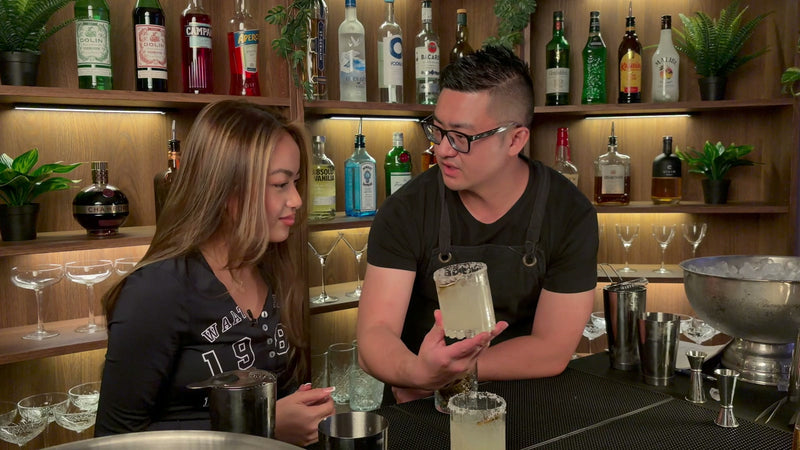
A classic Negroni uses equal parts gin, Campari and sweet vermouth. Start with 30 ml of each, stir with plenty of cold ice until properly chilled and diluted, strain over fresh ice and finish with an expressed orange peel.
In this guide
A Negroni is one of the simplest classic cocktails: equal parts gin, Campari and sweet vermouth, stirred with ice and finished with orange.
Its famous 1:1:1 ratio makes it easy to remember, but that does not mean every Negroni tastes the same. Your gin, vermouth, dilution and serving temperature can all change the balance dramatically.
This guide gives you the classic recipe first, then explains how to make it less bitter, more gin-forward and more balanced for your own palate.
Quick answer
For a classic Negroni, combine:
- 30 ml gin
- 30 ml Campari
- 30 ml sweet vermouth
Stir with plenty of cold ice until properly chilled and diluted, then strain over fresh ice in a rocks glass and finish with an expressed orange peel.
The equal-parts ratio is the traditional starting point, not a rule you can never change.
Negroni recipe
Ingredients
- 30 ml gin
- 30 ml Campari
- 30 ml sweet vermouth
- Ice
- Orange peel, for garnish
Makes: 1 cocktail
Equipment
- Mixing glass or sturdy alternative
- Bar spoon or long-handled spoon
- Jigger
- Strainer
- Rocks glass
If you are putting together your first home bar, our guide to what cocktail tools you actually need covers the essentials.
Method
- Add the gin, Campari and sweet vermouth to a mixing glass.
- Fill generously with cold ice.
- Stir smoothly until the cocktail is thoroughly chilled and tastes properly diluted. Around 20 to 30 seconds is a useful starting point.
- Strain into a rocks glass over a large fresh cube or several solid cubes.
- Express an orange peel over the surface of the drink and add it as the garnish.
If stirring is still new to you, our guide on how to stir a cocktail properly explains the technique in detail.
What is a Negroni?
A Negroni is a bitter, spirit-forward Italian cocktail built from gin, Campari and sweet vermouth.
Each ingredient has a distinct role:
- Gin provides the alcoholic backbone and botanical character.
- Campari supplies much of the signature bitterness and bright red colour.
- Sweet vermouth adds sweetness, body and herbal complexity.
The drink is commonly associated with the Italian aperitivo tradition and is often enjoyed before a meal.
The familiar origin story places the cocktail in Florence around 1919, where Count Camillo Negroni is said to have asked for an Americano strengthened with gin instead of soda. Cocktail history is rarely perfectly tidy, so it is better treated as the traditional account rather than an unquestionable fact.
Why is a Negroni equal parts?
The classic 1:1:1 ratio gives the drink an unusually easy structure to remember.
Each ingredient is assertive enough to stand alongside the others:
- gin brings dryness and botanicals
- Campari brings bitterness
- sweet vermouth brings sweetness and depth
Equal parts is also an excellent beginner benchmark because it gives you something consistent to adjust from.
Once you know what the standard version tastes like, you can increase the gin, reduce the Campari or change the vermouth according to your preference.
What gin should you use in a Negroni?
You generally want a gin with enough character to remain noticeable beside Campari and sweet vermouth.
London Dry gin
This is the most dependable starting point.
Its juniper-led, dry profile gives the cocktail a strong botanical backbone.
Citrus-forward gin
A gin with noticeable citrus character can work beautifully and reinforce the orange garnish.
Softer contemporary gin
Floral, cucumber-led or particularly delicate gins can still work, but some may become less noticeable beside the stronger flavours of Campari and vermouth.
You do not need an expensive bottle. Choose a gin you enjoy that has enough presence for the drink.
What sweet vermouth should you use?
Sweet vermouth has a major influence on how a Negroni tastes.
A richer, sweeter vermouth can soften the bitter side of the drink, while a leaner or more herbal vermouth can make it feel sharper.
This is why changing vermouth can sometimes make a larger difference than changing gin.
Store opened vermouth properly
Sweet vermouth is a wine-based ingredient, so its flavour changes after opening.
Keep opened vermouth refrigerated and pay attention to how it tastes rather than leaving a bottle sitting at room temperature indefinitely.
If your Negroni suddenly tastes flat or disconnected despite using the same recipe, taste the vermouth on its own.
Do you need Campari for a Negroni?
For the classic Negroni, Campari is the defining bitter ingredient.
You can absolutely experiment with other bitter aperitivo liqueurs, but they have different levels of sweetness, bitterness and herbal character.
The result may be excellent, but it becomes a variation rather than the standard Campari-based Negroni.
How to stir a Negroni properly
Use plenty of cold, solid ice and stir smoothly until the drink is properly chilled and diluted.
Around 20 to 30 seconds is a useful starting range, but the exact time varies according to:
- ice size
- ice condition
- starting temperature
- mixing glass
- your preferred dilution
A Negroni is commonly stirred because its ingredients combine easily and the drink benefits from the smooth, relatively dense texture produced by stirring.
Our guides to how to stir a cocktail properly and when to shake or stir a cocktail explain the broader technique.
Can you build a Negroni directly in the glass?
Yes.
There are two common approaches.
Stir and strain
Combine everything in a mixing glass, stir with ice and strain over fresh serving ice.
This gives you greater control over the drink's starting temperature and dilution.
Build directly in the serving glass
Add the gin, Campari and vermouth directly to a rocks glass over ice and stir.
This is quick, simple and very common.
The drink will continue changing as the serving ice melts, which is part of the experience of many spirit-forward cocktails.
The same choice appears in the Old Fashioned, which you can explore in our guide to how to make an Old Fashioned.
What ice should you use?
For stirring
Use plenty of cold, solid ice.
A generous amount of ice gives you a consistent way to chill and dilute the drink.
For serving
One large cube works particularly well in a rocks glass, although several normal cubes are perfectly suitable.
A large cube gives the drink a clean presentation and allows it to change gradually as you drink.
Avoid heavily melted ice
Ice that has already been sitting around melting makes dilution harder to control.
Clear ice looks excellent but is not required.
Our guide on how much ice you should use in a cocktail covers the subject in more depth.
How to garnish a Negroni
An orange peel is the classic choice.
- Cut a broad strip of orange peel.
- Hold it over the finished cocktail.
- Squeeze or bend it to release the aromatic oils over the surface.
- Drop it into the drink or place it on the rim.
An orange slice is another common presentation.
The garnish matters because aroma is part of how you perceive flavour. The orange oils complement the bitter citrus character already present in the cocktail.
Why is my Negroni too bitter?
First, remember that a Negroni is supposed to have a pronounced bitter character.
If it is more bitter than you enjoy, there are several ways to adjust it.
Check the sweet vermouth
A richer vermouth may provide more sweetness and body than a leaner one.
Also make sure an opened bottle still tastes fresh and aromatic.
Check the gin
A particularly subtle gin may disappear behind the Campari.
A more assertive gin can create a more balanced three-way relationship.
Give it enough dilution
An under-diluted drink can taste harsher and more intense.
Stir until it tastes integrated rather than simply stopping after a fixed number of seconds.
Serve it properly chilled
Temperature influences how the bitterness and alcohol are perceived.
Change the ratio
If equal parts simply does not suit you, try something like:
- 30 ml gin
- 25 ml Campari
- 35 ml sweet vermouth
That creates a softer starting point without completely changing the character of the drink.
How to make a Negroni drier or more gin-forward
If you want a more gin-led drink, increase the gin rather than changing every ingredient at once.
For example:
- 45 ml gin
- 30 ml Campari
- 30 ml sweet vermouth
This pushes the botanicals forward and makes the drink feel drier while preserving the bitter-sweet structure underneath.
You can also slightly reduce the vermouth if sweetness is the issue.
Start from equal parts, then adjust one variable at a time.
Why does my Negroni taste watery?
Possible causes include:
- ice that was already heavily melting
- stirring substantially longer than necessary
- leaving the cocktail sitting in the mixing glass
- using lots of small ice fragments
- inaccurate measurements
Remember that some dilution is necessary. A good Negroni should not taste like three room-temperature ingredients poured directly from their bottles.
Why does my Negroni taste too strong?
It may simply be under-diluted.
Try:
- stirring a little longer
- checking your measurements
- making sure the drink is sufficiently cold
- considering whether your gin is particularly high in alcohol
Do not automatically add more vermouth just to reduce the perception of alcohol. Controlled dilution may be the better adjustment.
Negroni vs Boulevardier
The basic difference is the base spirit.
Negroni:
- gin
- Campari
- sweet vermouth
Boulevardier:
- whiskey
- Campari
- sweet vermouth
Changing gin to whiskey shifts the drink from bright botanicals towards richer spice, oak and darker spirit flavours.
A Boulevardier is not simply a better or easier Negroni. It is its own classic built on a closely related structure.
Popular Negroni variations
Boulevardier
Whiskey replaces gin.
White Negroni
A pale bitter liqueur and aromatised wine or aperitif replace the traditional Campari and sweet vermouth combination.
Negroni Sbagliato
Sparkling wine replaces the gin, producing a lighter and more sparkling variation.
Mezcal Negroni
Mezcal replaces gin, adding smoke and agave character.
Americano
Campari and sweet vermouth are lengthened with soda water rather than gin.
These variations are worth treating as separate drinks rather than forcing them into one universal Negroni formula.
Can you batch Negronis?
Yes. The equal-parts recipe makes batching particularly straightforward.
Batch for eight cocktails
- 240 ml gin
- 240 ml Campari
- 240 ml sweet vermouth
Combine in a clean bottle and keep chilled.
This produces 90 ml of undiluted cocktail mixture per serve.
To serve
- Measure 90 ml of the batch into a mixing glass.
- Add plenty of ice.
- Stir until properly chilled and diluted.
- Strain over fresh ice.
- Express an orange peel over the drink.
If you want to pre-dilute the batch for faster service, test the required water on one individual Negroni first and scale from there rather than relying on a universal dilution percentage.
Because the batch contains vermouth, keep it refrigerated.
Common Negroni mistakes
Using tired vermouth
If an opened bottle has lost its freshness and aroma, the whole cocktail suffers.
Serving the drink too warm
A properly chilled Negroni is far more integrated than a warm one.
Using too little ice
Give yourself enough cold ice to control the chilling and dilution properly.
Stopping the stir too early
Under-dilution can make the bitterness and alcohol feel unnecessarily aggressive.
Measuring by eye
The equal-parts structure only works if the parts are actually equal.
Trying to remove all the bitterness
Bitterness is part of the identity of the drink.
If you fundamentally dislike bitter cocktails, another style may suit you better.
Skipping the garnish
The orange oils add an aromatic layer that genuinely changes the drinking experience.
Learn the technique behind the recipe
The Negroni is a good example of why simple cocktails are so useful for learning.
There are only three ingredients, so you can clearly taste the effects of dilution, temperature, ratios and ingredient choice.
Cocktail Playbook's beginner cocktail course teaches those fundamentals through classic drinks so you can understand why a cocktail works instead of simply memorising measurements.
Frequently asked questions
What is the classic Negroni ratio?
The traditional starting ratio is equal parts gin, Campari and sweet vermouth, commonly 30 ml of each.
Is a Negroni supposed to be bitter?
Yes. Bitterness is a defining characteristic of the cocktail, although you can soften it through your vermouth choice, dilution or ratio.
Do you have to use Campari in a Negroni?
Campari is the traditional bitter ingredient in the classic version. Other bitter aperitivo liqueurs can make excellent variations.
What gin is best for a Negroni?
A gin with enough botanical character to stand beside Campari and sweet vermouth works well. London Dry gin is an excellent starting point.
Should a Negroni be stirred or shaken?
It is traditionally stirred. Stirring chills and dilutes the cocktail while maintaining the smooth, dense texture associated with the drink.
Can you make a Negroni directly in the glass?
Yes. Add the ingredients over ice and stir. Using a separate mixing glass simply gives you more control over the initial dilution.
Why is my Negroni too bitter?
It may need more dilution, a richer or fresher sweet vermouth, a more assertive gin or a slightly adjusted ratio.
What is the difference between a Negroni and a Boulevardier?
A Negroni uses gin, while a Boulevardier replaces the gin with whiskey.
Can you batch a Negroni?
Yes. Combine equal amounts of gin, Campari and sweet vermouth ahead of time, then stir individual serves with ice or test a pre-diluted batch before serving.