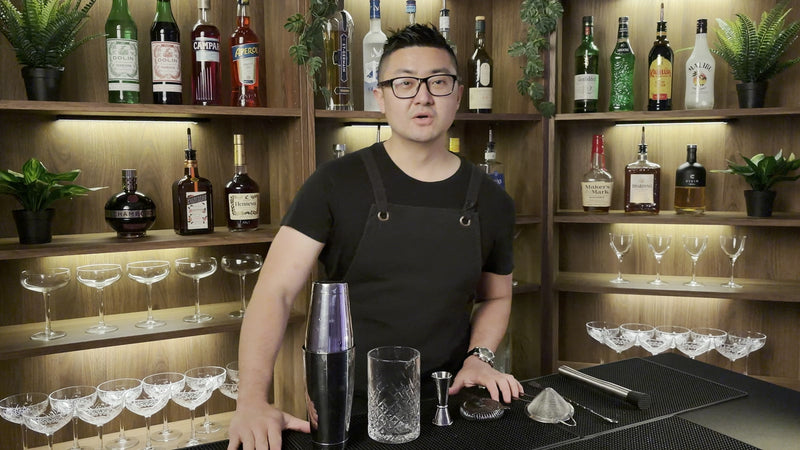
Start your home bar with two to four base spirits you actually enjoy, a few versatile modifiers, fresh citrus, simple syrup, a shaker, jigger, strainer, bar spoon and plenty of normal freezer ice. You do not need dozens of bottles or professional equipment to make a wide range of good cocktails at home.
In this guide
A good home bar is not a collection of every bottle and cocktail gadget you can find. For a beginner, it is better to build a small, versatile setup that lets you make the drinks you actually enjoy.
A few base spirits, useful modifiers, fresh citrus, simple syrup, basic tools and enough ice can already cover a surprisingly wide range of classic cocktails.
This guide explains what is worth buying first, what can wait and how to expand your home bar without wasting money on bottles and equipment you rarely use.
Quick answer
For a beginner home bar, start with:
- two to four base spirits you actually enjoy
- a few versatile modifiers such as orange liqueur or vermouth
- fresh lemons and limes
- simple syrup
- a cocktail shaker
- a jigger
- a strainer
- a bar spoon
- a citrus juicer
- basic glassware you already own or will regularly use
- plenty of clean, cold freezer ice
You do not need twenty bottles or professional bar equipment to start making good cocktails at home.
What do you actually need for a beginner home bar?
Think in categories rather than trying to copy the inventory of a commercial bar.
Base spirits
Choose two to four from:
- gin
- vodka
- tequila
- rum
- whiskey
You do not need all five immediately. Choose according to the cocktails you want to make.
Modifiers
Useful options include:
- orange liqueur
- sweet vermouth
- dry vermouth
- a bitter aperitivo such as Campari if Negronis are a priority
- coffee liqueur if you regularly make Espresso Martinis
Sweeteners
- simple syrup
- agave syrup if tequila drinks are important to you
Fresh ingredients
- lemons
- limes
- mint when required
- oranges when useful for garnish
Mixers
Buy according to the drinks you make:
- soda water
- tonic water
- ginger beer
- ginger ale
- cola
Basic tools
- cocktail shaker
- jigger
- strainer
- bar spoon
- citrus juicer
- peeler
- knife and chopping board
For the full breakdown, see What Cocktail Tools Do You Actually Need?
How many bottles do you need to start a home bar?
There is no fixed number.
A useful home bar can often begin with roughly five to eight alcoholic bottles across spirits and modifiers, but even that is only a practical reference point.
You could start smaller.
The important principle is versatility. A bottle that helps you make four drinks you enjoy is more useful than a specialist liqueur you bought for one recipe and never touch again.
Add bottles because a drink you genuinely want to make requires them, not because a home bar checklist says you should own them.
What spirits should you buy first?
Gin
Gin gives you access to drinks such as:
- Martini
- Negroni
- Gin and Tonic
- gin-based sours
See How to Make a Classic Martini and How to Make a Negroni.
Vodka
Vodka is useful for:
- Espresso Martini
- Cosmopolitan
- simple mixed drinks and highballs
See How to Make an Espresso Martini and How to Make a Cosmopolitan.
Tequila
Tequila gives you:
- Margarita
- Tommy's Margarita
- other tequila sours and long drinks
See How to Make a Margarita and How to Make a Tommy's Margarita.
Rum
Rum opens up:
- Daiquiri
- Mojito
- Piña Colada
See How to Make a Daiquiri, How to Make a Mojito and How to Make a Piña Colada.
Whiskey
Whiskey is useful for:
- Old Fashioned
- Whiskey Sour-style drinks
- whiskey highballs
See How to Make an Old Fashioned.
Do you need every base spirit?
No.
Build around your taste.
If you mostly drink Margaritas, Daiquiris and Mojitos, tequila and rum will probably be much more useful to you than buying vodka and whiskey simply for completeness.
A home bar should reflect the person drinking from it.
What liqueurs and modifiers should beginners buy?
Modifiers are where home bars can become expensive very quickly, so buy strategically.
Orange liqueur
A versatile option for drinks such as:
- Margarita
- Cosmopolitan
Triple sec is a broad style of orange liqueur, with different products varying in flavour, sweetness and strength.
Sweet vermouth
Useful for drinks such as the Negroni and Manhattan-style cocktails.
Dry vermouth
Worth buying if Martinis are part of your home bar.
Bitter aperitivo
A bottle such as Campari becomes useful if you make Negronis or other bitter aperitivo cocktails.
Coffee liqueur
Worth owning if Espresso Martinis are a regular drink for you.
See our guide to the best coffee liqueur for an Espresso Martini.
Amaretto
A specialist bottle compared with orange liqueur or vermouth, but very useful if you particularly enjoy an Amaretto Sour.
You do not need every modifier on this list.
Which bottles give you the most cocktail options?
One flexible setup might include:
- gin
- tequila
- rum
- whiskey or vodka
- orange liqueur
- sweet vermouth
- dry vermouth
- a bitter aperitivo
But that is an example, not a required shopping list.
If you never drink Martinis, there is little reason to prioritise dry vermouth. If you love Espresso Martinis, coffee liqueur may be much more useful.
What mixers should you keep at home?
Soda water is one of the most flexible choices.
Beyond that, stock according to preference:
- tonic water for Gin and Tonics
- ginger beer for drinks with a stronger ginger profile
- ginger ale for lighter mixed drinks
- cola for simple spirit-and-mixer serves
- sparkling wine if you regularly make spritzes
Carbonated mixers lose carbonation after opening, so smaller containers can be useful if you only make one or two drinks at a time.
What fresh ingredients should you keep?
You do not need a permanent garnish fridge.
Buy fresh ingredients around the drinks you plan to make.
The most useful are:
- limes
- lemons
- mint
- oranges for twists or wedges
This reduces waste and keeps your ingredients fresher.
Do you need bottled citrus juice?
Fresh citrus is a useful baseline for learning cocktails because lime and lemon are particularly noticeable in simple sours.
Bottled products vary considerably, and convenience can matter.
The useful question is not whether bottled juice is automatically wrong. It is whether the product gives you the flavour and acidity the recipe needs.
Why simple syrup belongs in a home bar
Simple syrup is cheap, versatile and easy to make from sugar and water.
It gives you precise control over sweetness and integrates more easily into cold drinks than granulated sugar.
See What Is Simple Syrup and How Do You Make It?
Do you need agave syrup?
Not unless you make cocktails where it is useful.
Agave is particularly helpful for:
If you rarely drink tequila cocktails, simple syrup may be enough initially.
What cocktail tools do you actually need?
For most beginners, start with:
- cocktail shaker
- jigger
- strainer
- bar spoon
- citrus juicer
Useful additions later include:
- mixing glass
- fine mesh strainer
- muddler
- specialty ice moulds
The complete guide is here: What Cocktail Tools Do You Actually Need?
Boston shaker vs Cobbler shaker
Both can make excellent cocktails.
A Cobbler shaker combines the body, lid and built-in strainer into one unit.
A Boston shaker uses two vessels that form a seal and generally requires a separate strainer.
Neither automatically makes a better cocktail. The main differences are handling, capacity, cleaning and personal preference.
Do you need a mixing glass?
Not immediately.
A dedicated mixing glass is convenient for Martinis, Negronis and other stirred cocktails, but a suitable household vessel can work while you are learning.
Technique matters more than buying the specialised vessel on day one.
See How to Stir a Cocktail Properly.
What glassware should you buy first?
You do not need a dedicated glass for every named cocktail.
A practical starting set might be:
- 2 rocks glasses
- 2 highball glasses
- 2 coupes or small stemmed cocktail glasses
Even that is optional.
Wine glasses, tumblers and other suitable glassware you already own are perfectly usable while you learn which styles you make most often.
What ice setup do you need?
Normal freezer ice is enough to begin.
Focus on having:
- clean ice
- cold, solid ice
- enough ice for shaking, stirring and serving
You do not need a clear-ice machine to make good cocktails.
Larger cubes can be useful for some served drinks, but they are an optional refinement rather than a beginner requirement.
See How Much Ice Should You Use in a Cocktail?
How should you organise a home bar?
Keep the setup practical rather than decorative first.
- store your most-used spirits within easy reach
- group vermouths and liqueurs together
- keep tools near your preparation area
- store citrus and other perishables appropriately
- keep frequently used mixers accessible
- clean tools after making drinks
The easier your setup is to use, the more likely you are to actually make drinks with it.
How should you store spirits?
Most distilled spirits are generally stored upright, away from excessive heat and direct sunlight.
They are considerably more stable after opening than wine-based products such as vermouth.
Follow product-specific storage guidance where provided.
How should you store vermouth?
Vermouth is wine-based and changes after opening.
Refrigerate opened vermouth and pay attention to how its aroma and flavour develop over time.
There is no need to rely on one rigid universal expiry date for every bottle.
If Martinis are part of your home bar, the condition of your vermouth is worth paying attention to.
How should you store homemade syrup?
Use clean containers and refrigerate homemade syrups unless the recipe or product guidance indicates otherwise.
Because homemade recipes, sugar concentrations and handling vary, avoid relying on one universal shelf-life number.
Discard a syrup if you notice obvious mould, fermentation, unusual odours or other signs of spoilage.
What should you not buy yet?
Beginners can save a lot of money by delaying purchases that solve problems they do not yet have.
You probably do not need:
- dozens of niche liqueurs
- three or four versions of every base spirit
- a large matching glassware collection
- professional speed rails
- huge garnish inventories
- smoke guns
- novelty cocktail gadgets
- large amounts of perishable ingredients
- an expensive clear-ice machine
- obscure bitters without a recipe in mind
None of these purchases is inherently bad. They simply make more sense after you know you will actually use them.
How much should a beginner home bar cost?
There is no useful universal price because alcohol, equipment and taxes vary considerably by market.
Instead of choosing a target budget, control the cost by:
- starting with fewer bottles
- using existing glassware
- using suitable kitchen equipment where practical
- buying bottles around recipes rather than collecting randomly
- expanding gradually
The bottles will usually represent a significant part of the cost, which is another reason not to buy spirits and liqueurs you have no immediate use for.
Build your home bar around cocktails you actually drink
Margarita-focused home bar
Start with:
- tequila
- orange liqueur
- agave syrup
- limes
- salt
- shaker
- jigger
You can make:
Gin-focused home bar
Start with:
- gin
- dry vermouth
- sweet vermouth
- bitter aperitivo
- tonic water
- lemons or oranges
You can make:
Rum-focused home bar
Start with:
- white or lightly aged rum
- simple syrup
- lime
- mint
- pineapple and coconut ingredients when needed
You can make:
Vodka-focused home bar
Start with:
- vodka
- coffee liqueur
- orange liqueur
- cranberry juice
- coffee or espresso
- lime
You can make:
Whiskey-focused home bar
Start with:
- whiskey
- simple syrup
- bitters
- citrus when required
You can start with an Old Fashioned and expand into other whiskey cocktails later.
The best first cocktails to learn with a home bar
You do not need to learn dozens of drinks immediately.
A strong beginner group includes:
- Margarita
- Daiquiri
- Mojito
- Old Fashioned
- Negroni
- Classic Martini
- Espresso Martini
- Cosmopolitan
- Aperol Spritz
- Amaretto Sour
Together, these introduce you to shaking, stirring, building, citrus balance, dilution and spirit-forward cocktails.
How to expand your home bar over time
Stage 1: Build the foundation
Choose your main spirits, citrus, simple syrup and essential tools.
Stage 2: Add versatile modifiers
Add the vermouths, orange liqueur or bitter aperitivo required by drinks you want to learn.
Stage 3: Add cocktail-specific bottles
Buy coffee liqueur, amaretto or other specialised modifiers once specific drinks justify them.
Stage 4: Improve equipment if you want to
Better glassware, deliberate ice and specialised tools can come later.
By this point, you will know which upgrades actually improve your own setup.
Common home bar mistakes
Buying too many bottles at once
Start with what you will use.
Choosing bottles before choosing cocktails
Decide what you want to make first.
Ignoring fresh ingredients
A large bottle collection cannot compensate for neglected citrus and mixers.
Not using a jigger
Accurate measurements make recipes repeatable and troubleshooting much easier.
Buying tools instead of learning technique
A premium shaker cannot fix poor shaking technique.
Leaving vermouth unrefrigerated
Opened vermouth should generally be refrigerated.
Buying multiple similar spirits too early
One useful bottle is enough until you know why you want a second.
Over-investing in glassware
Function matters more than owning every traditional shape.
Running out of ice
Shaking, stirring and serving all require more ice than many beginners expect.
Stocking perishables without a plan
Buy fresh ingredients around what you intend to make.
Assuming a bigger bar is a better bar
A focused home bar you actually use is more valuable than a large collection gathering dust.
A home bar becomes valuable when you know how to use it
The bottles and tools are only the starting point.
A modest setup combined with good measurement, shaking, stirring and balance can produce excellent cocktails without turning your home into a commercial bar.
Cocktail Playbook's beginner cocktail course teaches those fundamentals through classic drinks so you can get more from the bottles and tools you already own.
Frequently asked questions
What do I need for a beginner home bar?
Start with a few base spirits, versatile modifiers, citrus, simple syrup, basic tools, useful glassware and plenty of ice.
How many bottles do I need?
There is no fixed number. Roughly five to eight alcoholic bottles can create a versatile starter bar, but you can begin with fewer.
What spirits should I buy first?
Choose from gin, vodka, tequila, rum and whiskey according to the cocktails you actually enjoy.
Do I need every type of liquor?
No. A focused selection is usually more useful for a beginner than trying to own every category.
What liqueurs should a beginner buy?
Orange liqueur, vermouth or a bitter aperitivo are versatile choices, but the best selection depends on which drinks you make.
What mixers should I keep?
Soda water is versatile. Add tonic, ginger beer, cola and other mixers according to your preferences.
What cocktail tools are essential?
A shaker, jigger, strainer, bar spoon and citrus juicer cover most beginner needs.
Do I need a mixing glass?
No. It is useful for stirred cocktails, but a suitable household vessel can work when starting out.
What glassware should I buy?
Rocks glasses, highballs and coupes form a flexible small collection, but existing kitchen glassware can also work.
Can I use normal freezer ice?
Yes. Clean, cold freezer ice is enough to start making cocktails.
How should I store vermouth?
Keep opened vermouth refrigerated because it is wine-based and its flavour changes over time.
How much does a home bar cost?
Costs vary too much by market for one useful universal figure. Starting small and expanding around specific recipes keeps the investment manageable.
What should I not buy yet?
Avoid collecting niche liqueurs, duplicate spirits, expensive specialist glassware and novelty equipment before you know you will use them.
Which cocktails should I learn first?
Start with versatile classics such as the Margarita, Daiquiri, Mojito, Old Fashioned, Negroni and Martini, then expand according to your taste.
How should I expand my home bar?
Add bottles and equipment when a specific cocktail or technique creates a genuine reason to own them.
Related Guides
- What Cocktail Tools Do You Actually Need?
- How Much Ice Should You Use in a Cocktail?
- What Is Simple Syrup and How Do You Make It?
- How to Shake a Cocktail Properly
- How to Stir a Cocktail Properly
- How to Make a Margarita
- How to Make a Daiquiri
- How to Make a Classic Martini
- How to Make an Old Fashioned
- How to Make a Negroni