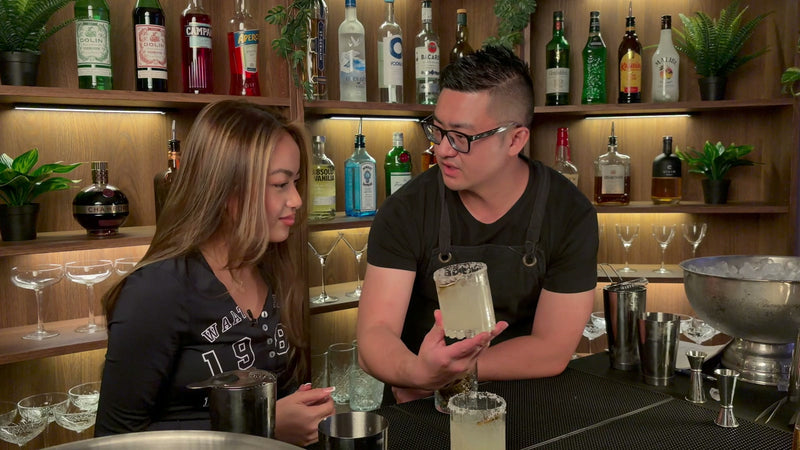
A classic-style Martini combines 60 ml London dry gin with 15 ml dry vermouth. Stir with plenty of cold ice until properly chilled and diluted, strain into a chilled Martini or coupe glass, and garnish with either an expressed lemon twist or an olive.
In this guide
A Martini is one of the simplest cocktails on paper and one of the most debated in practice. Gin or vodka, more vermouth or less, olive or lemon, shaken or stirred: almost every decision changes the finished drink.
For a beginner, the easiest approach is to start with a balanced ratio and learn what each ingredient and technique contributes. From there, you can make the Martini drier, wetter, more savoury or more spirit-forward according to your own taste.
Quick answer
For a classic-style Martini, combine:
- 60 ml London dry gin
- 15 ml dry vermouth
- 1 dash orange bitters, optional
- Ice
- Lemon twist or olive, for garnish
Stir with plenty of cold ice until thoroughly chilled and appropriately diluted, then strain into a chilled Martini or coupe glass.
This is a 4:1 gin-to-vermouth ratio. It is a useful starting point, not the only correct Martini ratio.
Classic Martini recipe
Ingredients
- 60 ml London dry gin
- 15 ml dry vermouth
- 1 dash orange bitters, optional
- Ice
- Lemon twist or olive
Makes: 1 cocktail
Equipment
- Mixing glass
- Bar spoon
- Jigger
- Julep or Hawthorne strainer
- Martini glass or coupe
If you are building your first setup, see our guide on what cocktail tools you actually need.
Method
- Add the gin, dry vermouth and optional orange bitters to a mixing glass.
- Fill generously with cold ice.
- Stir smoothly until the drink is properly chilled and diluted.
- Strain into a chilled Martini or coupe glass.
- Garnish with an expressed lemon twist or an olive.
What is a Martini?
A Martini is a spirit-forward cocktail built around gin and dry vermouth, usually stirred with ice and served without ice in a chilled glass.
Vodka Martinis are also firmly established, and the drink has accumulated a large number of styles and variations over time.
The Martini's exact origin is disputed. Recipes and drinks resembling the modern Martini developed over the late nineteenth and early twentieth centuries, but there is no single origin story that needs to be treated as definitive.
What is the classic Martini ratio?
There is no single Martini ratio that everyone agrees on.
Useful reference points include:
- 2:1 gin to vermouth: softer and more vermouth-forward
- 3:1: a useful middle ground
- 4:1: drier and more spirit-forward
- 5:1: more gin-forward again
- Very dry: only a small amount of vermouth
The 4:1 recipe in this guide is simply a practical place for a beginner to start.
Try it, then adjust the vermouth in your next Martini. A difference of only a few millilitres is noticeable in a drink this simple.
Gin vs vodka Martini
Both are legitimate.
Gin Martini
Gin contributes its own botanical character, which interacts with the herbs, spices and wine character of the vermouth.
London dry gin is a particularly useful starting point because its juniper-forward profile gives you a clear reference for what a traditional gin Martini tastes like.
Vodka Martini
Vodka creates a more neutral base, making the vermouth, garnish and temperature particularly noticeable.
It is not an inferior Martini. It is simply a different style.
What gin should you use?
London dry gin is an easy classic starting point.
You do not need a particular brand or an expensive bottle. What matters is choosing a gin whose flavour you enjoy because the Martini exposes the base spirit clearly.
More floral, citrus-forward or contemporary gins also work, but they change the aromatic profile of the drink.
What does dry vermouth do in a Martini?
Dry vermouth is an aromatised fortified wine, and it contributes much more than simple dilution.
It adds:
- herbal and botanical aroma
- wine character
- softness
- complexity
- balance against the intensity of the base spirit
Changing the amount of vermouth can dramatically change the Martini even when everything else stays the same.
How much vermouth should you use?
Start with around 15 ml dry vermouth to 60 ml gin.
Then adjust according to taste:
- more vermouth for a softer, wetter Martini
- less vermouth for a drier, more spirit-forward Martini
There is no prize for using the least possible vermouth.
The goal is to find the ratio that makes the gin and vermouth taste better together.
What does “dry Martini” mean?
In Martini terminology, a drier Martini generally means less vermouth relative to the base spirit.
It does not simply mean that the cocktail tastes less sweet.
Extra dry Martini
An extra dry Martini uses very little vermouth.
Some drinkers use only a small measure or coat the mixing glass with vermouth before adding the gin.
Wet Martini
A wet Martini uses more vermouth.
This gives the vermouth a larger role in the flavour and usually creates a softer overall profile.
50/50 Martini
A 50/50 Martini uses equal parts gin and dry vermouth.
It is much lighter in spirit intensity and much more vermouth-forward than the 4:1 version in this guide.
Should you shake or stir a Martini?
Stirring is the traditional default for a Martini because the drink is made from clear, spirit-forward ingredients and does not require the vigorous integration used for citrus or fruit cocktails.
Stirring generally preserves a smooth, clear texture.
Shaking creates more aeration and often introduces fine ice fragments, producing a noticeably different texture and appearance.
That does not make shaking universally wrong.
If you prefer the texture of a shaken Martini, you are making a stylistic choice rather than committing a bartending offence.
And despite the old phrase, shaking does not literally “bruise” gin.
For the broader logic, see Shake vs Stir: When to Shake or Stir a Cocktail.
For the technique itself, see How to Stir a Cocktail Properly.
How to stir a Martini properly
Fill your mixing glass generously with cold ice and stir smoothly around the inside of the glass.
The goal is controlled chilling and dilution rather than simply moving the liquid for a fixed number of seconds.
The exact time varies with:
- ice size
- ice temperature
- ingredient temperature
- mixing glass
- how vigorously you stir
With practice, temperature and taste become better guides than a stopwatch.
How cold should a Martini be?
A Martini is generally served very cold.
Low temperature helps soften the perception of alcohol and gives the drink its familiar crisp character.
That does not mean “colder at any cost.” Proper dilution and balance still matter.
What ice should you use?
Use plenty of cold, solid ice in the mixing glass.
A generously filled mixing glass gives you good contact between the drink and the ice and makes it easier to chill the Martini consistently.
Do not rely on the simplistic rule that more ice always means less dilution. Dilution depends on temperature, time, ice condition and technique.
Our guide on how much ice to use in a cocktail explains this in more detail.
Should you chill the Martini glass?
Yes, if practical.
A cold glass helps keep a small up-style cocktail cold after it leaves the mixing glass.
You can chill the glass in the freezer or fill it with ice and water while you prepare the drink.
Lemon twist vs olive
Both are classic choices, but they lead the drink in different directions.
Lemon twist
A lemon twist adds bright citrus aroma from the oils in the peel.
It works especially well when you want a clean, aromatic Martini.
Olive
An olive adds a savoury element and can contribute a small amount of briny flavour to the drink.
Choose according to the style you prefer.
How to express a lemon twist
- Cut a strip of fresh lemon peel.
- Hold it above the Martini with the coloured side facing the drink.
- Bend or squeeze the peel gently to release the aromatic oils over the surface.
- Drop it into the drink or place it neatly on the rim.
What is a Dirty Martini?
A Dirty Martini includes olive brine in addition to the spirit and vermouth.
The brine adds saltiness and savoury character and usually makes the drink slightly cloudy.
Because olive brines vary considerably, add it gradually rather than assuming one fixed amount works for every jar.
Dry Martini vs Dirty Martini
The terms describe different things.
Dry describes the amount of vermouth relative to the spirit.
Dirty means olive brine has been added.
A Martini can therefore be both dry and dirty at the same time.
What is a Gibson?
A Gibson is closely related to the Martini but is traditionally garnished with a pickled cocktail onion.
The onion gives the drink a subtly savoury character without turning it into a Dirty Martini.
Martini vs Vesper
A Vesper is a related spirit-forward cocktail made with gin, vodka and an aromatised wine or aperitif component rather than the standard gin-and-dry-vermouth structure of a Martini.
It was famously described in Ian Fleming's James Bond fiction, but it is best treated as a separate cocktail rather than simply another Martini ratio.
Why is my Martini too strong?
Possible causes include:
- insufficient dilution
- serving the drink too warm
- using very little vermouth
- using a particularly high-strength gin
Before changing the recipe, make sure the cocktail has been thoroughly chilled and appropriately diluted.
Why is my Martini watery?
Possible causes include:
- ice that was already heavily melting
- stirring longer than necessary
- starting with warm ingredients
- letting the drink sit in the mixing glass
Some dilution is essential. The aim is controlled dilution, not avoiding water entirely.
Why does my Martini taste too much like vermouth?
You may simply prefer a drier ratio.
Reduce the vermouth slightly on the next drink.
Also consider the condition of the vermouth. Because vermouth is wine-based, an opened bottle changes over time and may taste different from when it was fresh.
Why does my Martini taste harsh?
A harsh Martini may be:
- too warm
- under-diluted
- extremely dry for your preference
- made with a spirit profile you simply do not enjoy
Try slightly more vermouth and make sure the drink is properly chilled before assuming the gin itself is the problem.
How to make a Martini less dry
Add more vermouth.
Move from 4:1 toward 3:1 or 2:1 and compare the result.
How to make a Martini drier
Reduce the vermouth gradually.
Do not feel obliged to remove it entirely. Small changes make a significant difference.
Can you make a Martini without vermouth?
You can make extremely vermouth-light drinks, and individual preferences vary widely.
However, gin and dry vermouth together form the traditional structural foundation of the Martini.
Once vermouth is removed entirely, you are moving toward chilled gin or vodka rather than the balanced gin-and-vermouth structure this guide is teaching.
Can you batch Martinis?
Yes.
For eight Martinis using the 4:1 recipe:
- 480 ml gin
- 120 ml dry vermouth
- 8 dashes orange bitters, optional
Combine the ingredients and keep the batch well chilled.
You can then stir individual portions with ice before serving.
If you want to pre-dilute the entire batch, first make one Martini and measure or taste the result you like. Then scale that water addition rather than relying on one universal dilution percentage.
How should you store dry vermouth?
Dry vermouth is wine-based and changes after the bottle is opened.
Keep opened vermouth refrigerated and pay attention to how its aroma and flavour change over time.
There is no need to rely on one rigid number of days or weeks for every product and storage condition.
If the vermouth tastes noticeably dull or oxidised compared with when you opened it, replace it.
Common Martini mistakes
Using tired vermouth
Vermouth is an important ingredient, not an afterthought.
Using too little ice
Give the mixing glass plenty of cold ice.
Guessing the measurements
Small ratio changes are very noticeable in a Martini.
Assuming less vermouth is always better
Dryness is a preference, not a quality score.
Serving the drink warm
Temperature is a major part of the Martini experience.
Following a fixed stir time blindly
Ice and temperature conditions vary.
Treating shaking as universally wrong
Stirring is the classic default, but shaking creates a legitimate alternative texture.
Overcomplicating the garnish
An olive or expressed lemon twist is enough.
A Martini teaches you to taste
A Martini has nowhere for technique to hide.
Changing the vermouth by a few millilitres, stirring slightly differently or switching the garnish can make the drink feel completely different.
That makes it one of the best cocktails for understanding balance, temperature and dilution.
Cocktail Playbook's beginner cocktail course teaches those fundamentals through classic drinks so you can understand why a recipe works and adjust it confidently to your own taste.
Frequently asked questions
What is in a classic Martini?
A classic Martini contains gin and dry vermouth, usually stirred with ice and garnished with either a lemon twist or an olive.
What is the best Martini ratio?
There is no single best ratio. 4:1 gin to vermouth is a useful beginner starting point, while 2:1, 3:1, 5:1 and much drier versions are also common.
Is a Martini made with gin or vodka?
Gin is the traditional base, but vodka Martinis are well-established and legitimate.
What does dry mean in a Martini?
A drier Martini generally contains less vermouth relative to the base spirit.
How much vermouth goes in a Martini?
For this recipe, start with 15 ml dry vermouth to 60 ml gin and adjust from there.
Should a Martini be shaken or stirred?
Stirring is the traditional default and creates a smooth, clear texture. Shaking creates more aeration and a different texture but is not universally wrong.
Does shaking bruise gin?
No. “Bruising” gin is a longstanding cocktail myth rather than a literal effect of shaking.
What garnish goes on a Martini?
An expressed lemon twist or an olive are the two most familiar choices.
What is a Dirty Martini?
A Dirty Martini includes olive brine, creating a more savoury and salty variation.
What is a Gibson?
A Gibson is a Martini-related cocktail traditionally garnished with a pickled cocktail onion.
Can you make a Martini without vermouth?
You can make very vermouth-light versions, but completely removing vermouth moves away from the traditional gin-and-vermouth structure.
Why is my Martini too strong?
It may be too warm, insufficiently diluted or simply drier than you prefer.
Can you batch Martinis?
Yes. Batch the gin and vermouth ahead of time, keep chilled and either stir individual serves or test pre-dilution on one drink before scaling.