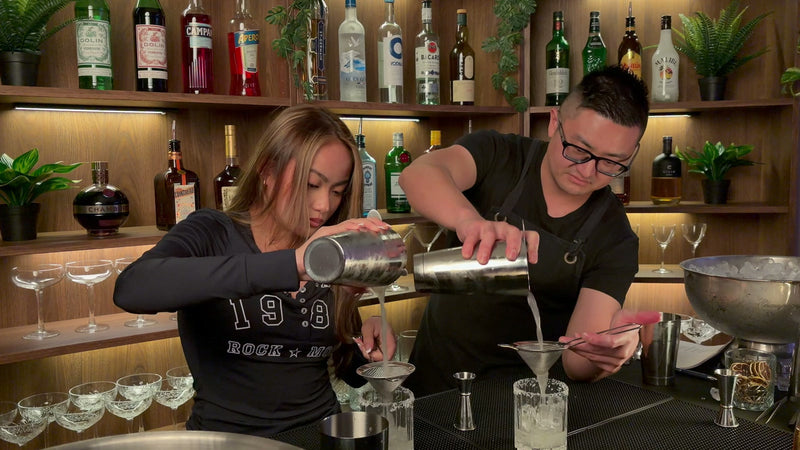
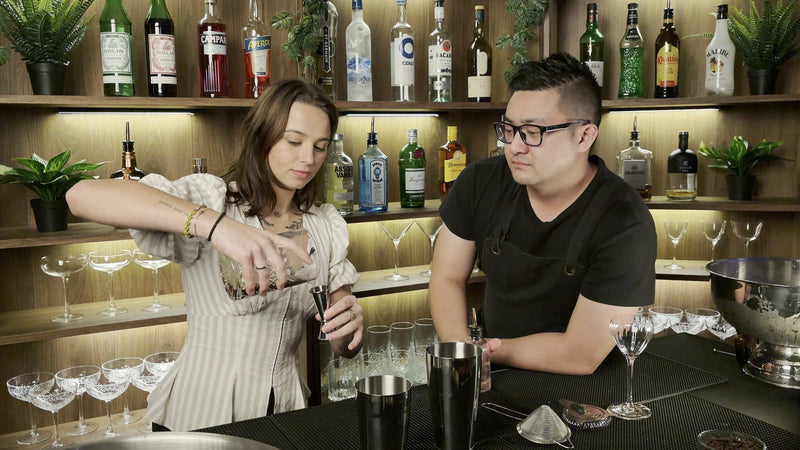
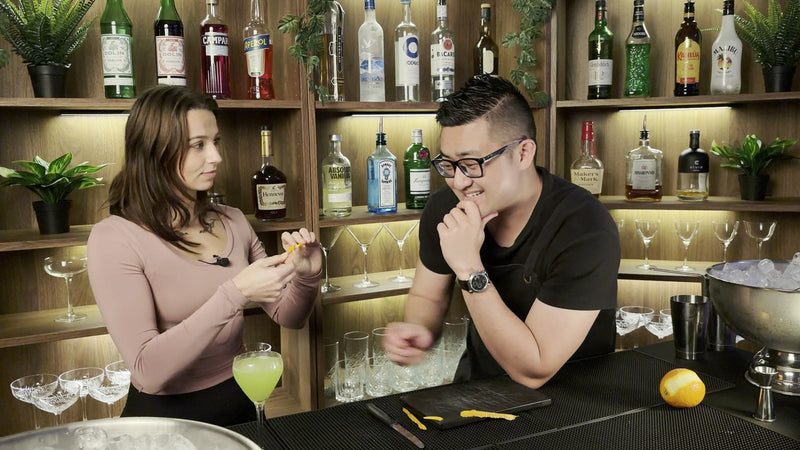
Start with a few essential tools, learn how balance and dilution work, and practise a small number of reliable cocktails. You do not need a fully stocked bar or hundreds of recipes to begin making great drinks at home.
In this guide
Making cocktails at home is far more approachable than most people assume. You do not need a professional bar setup, a wall of spirits, or years of experience. What you need is a clear understanding of a few core principles, a small collection of reliable tools, and a willingness to practise the same recipes more than once.
This guide covers everything a complete beginner needs to know before making their first drink.
What You Actually Need to Get Started
The barrier to entry is lower than it looks. A functional home bar kit can be assembled for a modest outlay, and many of the tools will last for years.
The essentials are:
- Cocktail shaker — a cobbler shaker (three-piece) is the most beginner-friendly option
- Jigger — a dual-sided measuring cup, typically 30 ml on one side and 60 ml on the other
- Strainer — a Hawthorne strainer for shaken drinks; a fine mesh strainer for double-straining
- Bar spoon — a long-handled spoon for stirred cocktails and layering
- Mixing glass — useful for stirred cocktails, though a clean pint glass works in the beginning
You can add a muddler, a channel knife, and a Lewis bag as your confidence grows. For now, the five items above will cover the majority of classic cocktails.
For spirits, start with three or four versatile bottles rather than buying broadly. Gin, vodka, bourbon, and white rum are a practical foundation. Each one anchors several well-known recipes, which means less waste and faster skill development.
Learn to Measure Before You Improvise
Every professional bartender measures. The jigger is not optional equipment for beginners pretending to be serious — it is the single most reliable way to make a consistent, well-balanced drink every time.
Most classic cocktail recipes are expressed in parts or ratios. A standard Daiquiri, for example, follows a 2:1:1 ratio — 60 ml rum, 30 ml lime juice, 30 ml sugar syrup. Once you understand that the ratio is the recipe, you can scale it up for a batch or adapt it to any spirit.
Measuring is not a sign of inexperience. It is the foundation of repeatability.
The habit of tasting as you go matters too. Build the drink to spec, then taste it before adding ice or transferring it. Ask whether it needs more acid, more sweetness, or more spirit, and make small adjustments. Over time, this trains your palate to understand balance rather than just follow instructions.
Understand the Balance of a Cocktail
Almost every well-regarded cocktail follows a structure built around three components: something strong, something sweet, and something sour or bitter. The exact proportions vary by drink, but the underlying logic is consistent.
- Strong — the spirit or spirits that give the drink its backbone
- Sweet — sugar syrup, liqueur, vermouth, or fruit juice with natural sweetness
- Sour or bitter — citrus juice, bitters, or dry vermouth
When a cocktail tastes flat or one-dimensional, one of these three components is usually out of proportion. A drink that tastes too boozy needs more sweet or sour. A drink that tastes too sweet needs more acid or spirit. A drink that tastes too sharp needs more sweetness or dilution.
Understanding this structure means you can identify what is wrong with a drink and correct it, rather than simply starting over.
Know When to Shake and When to Stir
This is one of the most commonly misunderstood distinctions in cocktail making, and it matters more than most beginners expect.
Shake when the recipe contains citrus juice, cream, or egg white. Shaking aerates and emulsifies these ingredients, which stirring cannot do.
Stir when the recipe contains only spirits, vermouth, or liqueur. Stirring chills and dilutes the drink gently, preserving clarity and a smooth texture that shaking would disrupt.
A Negroni, Martini, or Old Fashioned should always be stirred. A Daiquiri, Whisky Sour, or Margarita should always be shaken. Applying the wrong technique does not ruin the drink entirely, but it does produce a noticeably inferior result.
Beginner tip: When in doubt, look at the ingredients. Citrus or cream means shake. Spirits only means stir.
Use Plenty of Good Ice
Ice is an ingredient, not an afterthought. It controls dilution, chilling speed, and texture in ways that directly affect the finished drink.
Use large, clear ice when possible — it melts more slowly and dilutes the drink at a more controlled rate. Cloudy ice made from tap water still works, but it melts faster and can introduce off-flavours in certain spirits.
When shaking, fill the shaker two-thirds full with ice. Shake for around twelve to fifteen seconds for most drinks. When stirring, use a similar quantity of ice in the mixing glass and stir for around thirty seconds. Both techniques will chill the drink close to the same final temperature when executed correctly.
Never reuse ice from a shaker. Once it has been shaken it is diluted and partially broken down, and adding it to the finished drink will over-dilute the cocktail.
Start With a Small Number of Essential Cocktails
Attempting to learn dozens of recipes at once is a reliable way to learn none of them properly. A more effective approach is to master five drinks thoroughly before expanding.
A sensible beginner list:
- Daiquiri — teaches the sour template (spirit, citrus, sweet) and proper shaking technique
- Negroni — teaches stirring, balance, and how bitters work
- Old Fashioned — teaches spirit-forward drinks, dilution, and restraint
- Gin and Tonic — teaches the built drink format and how garnish contributes
- Whisky Sour — introduces egg white, dry shake technique, and foam texture
Each of these drinks teaches a transferable skill. Once you understand the Daiquiri template, for example, you can make a Gimlet, a Sidecar, a Margarita, and a dozen others without learning a new structure.
Common Beginner Mistakes
Most early mistakes in cocktail making come down to a small number of recurring errors:
- Not measuring — improvising proportions produces inconsistent results and makes it impossible to identify what went wrong
- Under-shaking or under-stirring — insufficient technique leaves the drink too warm and under-diluted
- Using low-quality mixers — a poor tonic or artificial cordial will undermine a good spirit; buy the best mixer you can afford
- Overcrowding the glass with ice — for built drinks, fill the glass with ice before adding the spirit, not after
- Ignoring fresh citrus — bottled lemon and lime juice tastes noticeably different from freshly squeezed; for sour cocktails, fresh juice is essential
The single most common mistake: not tasting the drink before serving it. Take a small sip before handing a cocktail to a guest. Adjust if necessary. This one habit makes a more immediate difference than almost anything else.
Where to Continue Learning
Reading about cocktail making develops your understanding, but the skill develops through repetition. Pick one drink and make it several times in a single sitting, adjusting slightly each time. Compare the results. This is a more effective learning method than making a different drink each time.
A few resources worth exploring:
- The back labels on spirits bottles often include suggested serves and classic pairings that are accurate and concise
- Classic cocktail books such as The Savoy Cocktail Book and PDT Cocktail Book provide well-tested historical recipes
- Tasting notes from distillers can help you understand what flavours a spirit contributes before you build a recipe around it
The fundamentals covered in this guide will carry you through the vast majority of cocktails you are likely to want to make at home. Techniques compound: every well-made Daiquiri makes the next one easier, and every stirred Negroni teaches you something about dilution and balance that applies to every stirred cocktail you will ever make.